EU leaders' chair proposes new cuts to EU 2028-2034 budget draft, suggests digital tax
By Jan Strupczewski
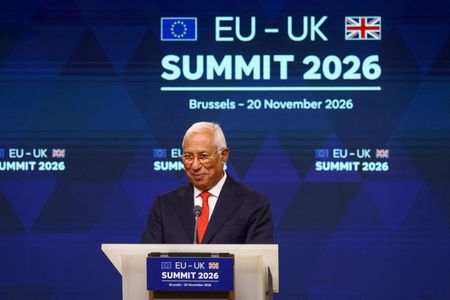
BRUSSELS, Nov 21 (Reuters) - The chairman of European Union leaders proposed further cuts to the European Commission's draft EU 2028-2034 budget on Saturday and suggested new revenue streams for the EU, including a digital tax, to help finance EU policies.
The cuts proposed by Antonio Costa, who chairs summits of EU leaders, would reduce the overall seven-year budget by €40 billion to €1.582 trillion compared to a proposal presented by the Irish EU presidency in October and by €180.6 billion compared to the original Commission proposal.
Costa's proposal mainly cuts the European Competitiveness Fund — aimed at helping make European industry more competitive against China and the United States — defence and external spending. Money for agriculture and cohesion is relatively protected compared to the Irish compromise proposal.
Nevertheless, France criticised the new numbers as not sufficiently protecting farmers, and the European Parliament's chief budget negotiator, Siegfried Muresan, said the numbers were a step backwards.
"This proposal is unacceptable to Parliament and cannot form the basis for our consent. The EU budget is an investment budget. Cuts, more cuts and a side of cuts are not an investment strategy," he said.
EU leaders will discuss Costa's proposals at a special summit on November 26-27 with a view to narrowing differences between the EU budget's net contributors and net beneficiaries, and to reaching an agreement in December.
The EU budget is how the 27-member bloc finances all its policies — from supporting farmers to developing new technology and supporting industry and research against competition from China and the US.
It also covers student exchanges, equalising standards of living across the EU, help for Ukraine and EU officials' salaries, among others.
DIGITAL TAX A PROPOSED NEW REVENUE
The EU budget is financed from national contributions and the so-called "own resources" — taxes and levies that are collected by EU countries but are dedicated to the EU budget, such as customs duties, a percentage of value-added taxes or a tax on non-recycled plastic waste.
The more such "own resources" the EU budget has, the less governments have to contribute from national coffers.
Costa's proposal for the digital tax builds on a 2018 proposal by the European Commission that was not taken up by EU governments at the time.
Costa has now proposed that the EU put a 3% tax on the annual net turnover from online advertising, digital intermediation services and user-generated data for companies with an annual turnover for digital activities of €50 million in the EU and a global turnover of over €750 million.
This would mean taxing mostly US-based digital giants such as Google, Microsoft, Meta, Apple or Amazon, a move many EU governments have been wary of for fear of angering US President Donald Trump, who has spoken against such a tax.
To find more money, Costa proposed slowing down the repayment of the capital of the more than €600 billion that the EU will have jointly borrowed by the end of 2026 for its post-pandemic recovery fund.
The repayment of the interest and capital will start in 2028 and last until 2058 as initially planned, but the repayment of capital may be slower in the first seven years to leave more money in the budget for other priorities, officials said.
The budget and its sources of revenue must be agreed unanimously and it is often an acrimonious battle. The seven-year 2028-2034 budget under discussion now is particularly difficult because of additional pressures on national budgets from high energy prices and defence spending.
Although the EU budget only has to be ready for 2028, leaders want a deal by the end of 2026 because there are elections next year in France, Italy, Poland, Greece, Estonia, Finland and Slovakia, with the budget likely to play a role in electoral campaigns.
(Editing by Timothy Heritage)
Find it fast
Looking for more insights? Explore our other news sections for updates on sustainable finance, companies and financial education