UK will reduce 'unsustainable' welfare costs, Healey says
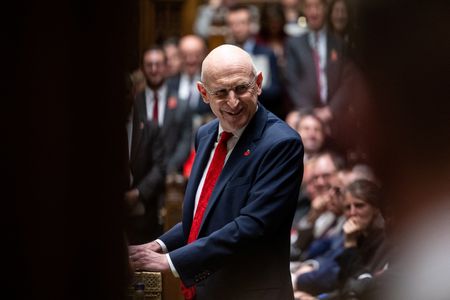
LONDON, Oct 29 (Reuters) - British finance minister John Healey said the government would lower its spending on welfare benefits as he sought to address one of the big public spending challenges that remain after his first budget announcement.
Asked by the BBC in an interview broadcast on Thursday whether welfare spending would be cut before the next election, Healey said: "We have to bring the benefits bill down. You don't do that by crude cuts."
The finance minister did not make a clear commitment on whether welfare spending would fall before the next election, due no later than mid-2029.
Healey announced his first major set of tax and spending plans on Wednesday which offered some short-term support for households hit by the surge in energy prices and raised taxes on banks, savers and landlords to help pay for it.
But the budget did not address some long-term issues facing the public finances, including the growing bill for welfare spending on pensioners and working-age people in poor health, which is set to cost more than 11% of the country's economic output this year.
The opposition Conservative Party and some bond investors have homed in on rising spending on social benefits as a symbol of misplaced government priorities and a lack of will in the Labour Party to lower borrowing.
However, markets have reacted broadly favourably to Healey's budget and on Thursday 10-year government borrowing costs had fallen to a four-week low.
Healey said Britain had to prevent the spending from getting ever bigger and he focused on the problem of unemployment among young people.
"This system is unsustainable. I've been clear about that," he told the BBC. "I feel a moral duty to deal with these youngsters that ... have been written off by previous governments."
A government review into young people who are not in employment, education or vocational training is due to be published next month and another review into the disability benefits system is being finalised.
Healey also drew criticism from the left-leaning Resolution Foundation for spreading too thinly his flagship spending measure – a £100 ($133) reduction in energy bills for 20 million households.
"Even those families receiving help (will be) facing higher energy bills than they did during the last energy price shock," Resolution Foundation chief executive Ruth Curtice said.
Typical annual energy bills this financial year are set to rise to £1,750 a year after government support, 4% higher than when they last peaked after Russia's 2022 invasion of Ukraine, the think tank said.
($1 = 0.7503 pounds)
(Writing by William Schomberg and David Milliken)
Find it fast
Looking for more insights? Explore our other news sections for updates on sustainable finance, companies and financial education