Nestle shoots to score younger generation with NBA deal
By Ozan Ergenay and Richa Naidu
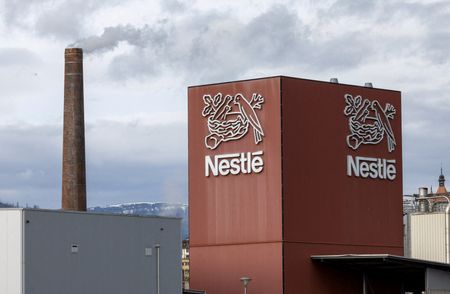
Oct 7 (Reuters) - Nestle is making its biggest-ever international sponsorship play through an NBA deal with its cocoa and malt drinks business, the latest consumer goods maker to turn to sports to reach increasingly health-conscious younger consumers.
Rivals like PepsiCo, Coca-Cola and Hellmann's condiment maker Unilever have in recent years raced to strike marketing deals with sports leagues and events that have strong Gen Z and Gen Alpha followings.
These shoppers tend to be more geared to fitness and nutrition, making them ideal targets for an industry keen to re-brand its products as healthy amid the rise of GLP-1 weight-loss drugs and movements like "Make America Healthy Again".
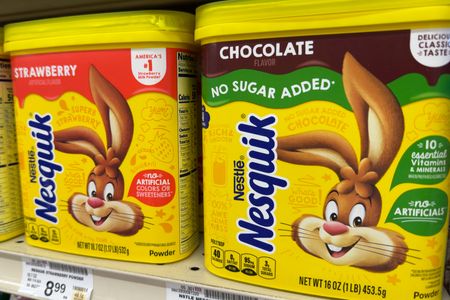
"There is a strong link and an absolute alignment with (the health) mission of the company," said Ali Abbas, who heads Nestle's cocoa and malted beverages business that owns Milo, Nesquik and Nescau.
He added there was also a strong link between the deal and the Swiss food giant's wider ambition to market its products as healthy, with the tie-up driving physical activity among consumers and advertising that Nestle's cocoa and malt beverages have protein and fibre in them.
"That is aligned with the GLP-1 vision," Abbas told Reuters.
The NBA deal, which spans 21 countries across four continents, aims to get at least 2.5 million young people physically active, Abbas said, declining to disclose financial terms due to confidentiality provisions in the agreement.
Abbas said the deal would tailor campaigns locally while pursuing shared global objectives around participation, youth engagement and commercial growth.
"This is what we are after: youth, culture, penetration and relevance with future generations," Abbas said.
As younger audiences become increasingly fragmented across digital platforms, sports franchises remain capable of delivering both scale and engagement.
The NBA told Reuters that food, beverage and consumer goods companies were increasingly seeking integrated, multi-market programmes rather than traditional sponsorship arrangements focused on a single category or market.
The basketball league reaches fans in 214 countries and territories and has more than 2.5 billion likes and followers across social media globally, with over 75% of that audience outside the United States, it said.
Peter Laatz, global managing director at sponsorship marketing agency IEG, said brands were increasingly using sports partnerships to support social media and creator-led marketing campaigns, pointing to Unilever's recent FIFA World Cup deal as an example.
In its largest ever sports partnership, Unilever used one of the world's biggest marketing platforms to push more than 35 personal care brands across over 120 markets, tying up with more than 50,000 creators.
"(Consumer packaged goods) brands seem to be using sports differently to fit a narrative that better serves their brand objectives and is more measurable," Laatz said.
The average US pro sports team now makes about $51 million a year from sponsors, up from $26 million a decade ago, he added.
'EMOTIONAL CONNECTION'
Sports accounts for 70% to 75% of total global sponsorship dollars invested by brands, according to ad giant WPP, which also said makers of consumer packaged goods made up about 18% of total global and US sports sponsorship spending.
"It's that emotional connection that the sporting event or team or franchise provides," John Scurfield, executive director of sports and gaming partnerships at WPP Media US, said.
He added that while standard ads focus mainly on captive audiences during live broadcasts, the full-scale partnerships that have been emerging extend a brand's reach into broader cultural relevance, social media engagement, and directly tapping communities.
"(Sports partnerships) provide brands with the ability to take it beyond just a live moment," Scurfield said.
Nestle's KitKat in 2024 inked a deal with Formula 1 for the period between 2025 and 2028, hoping to improve the chocolate brand's global reach and appeal to shoppers under 30. Until then, the world's biggest food company had never in its 160-year history signed a global marketing deal, instead relying on country-by-country agreements.
Nestle told Reuters research showed that because of the deal, 12% more people would consider buying KitKat, 10% more would recommend KitKat and 9% more would choose KitKat as their favourite brand. A racecar-shaped KitKat bar also reached more than 500 million people 30 days after its launch.
(Reporting by Ozan Ergenay in Gdansk and Richa Naidu in London, editing by Matt Scuffham and Milla Nissi-Prussak)
Find it fast
Looking for more insights? Explore our other news sections for updates on sustainable finance, companies and financial education