ECB's Lagarde sticking to measured steps to quell inflation
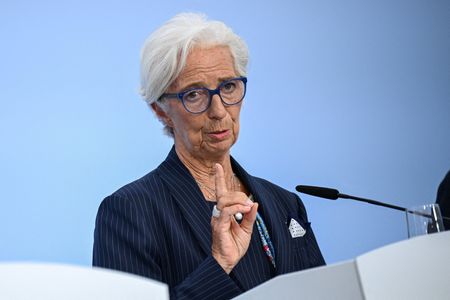
FRANKFURT, Sept 28 (Reuters) - This year's inflation surge has yet to generate dangerous second-round effects across the euro zone, so a moderate policy response from the European Central Bank remains appropriate, ECB chief Christine Lagarde said on Monday.
Euro zone inflation has already shot past 3% and may approach 4% by the end of the year, double the bank's target, fuelling market bets that up to four more rate hikes will be needed in the next year on top of two moves over the summer.
Lagarde, however, appeared to push back on some of the most aggressive market bets, arguing that surging oil and gas prices, stemming from the US-Iran conflict, are the main driver of higher prices.
"We see higher inflation ahead but no signs yet that it is becoming embedded," she told a European Parliament committee hearing in Brussels. "We do not see evidence at this stage of energy prices feeding into higher wages."
"This means that while the shock is too large to look through, we view a measured response as appropriate to keep inflation in check," she added.
Lagarde acknowledged that risks were skewed towards higher inflation and there was also a risk in governments offering generous subsidies to help shield consumers against higher energy costs.
Fiscal support has now increased to around 0.1 percentage points of euro zone GDP and the measures were far less temporary or targeted than hoped, Lagarde said.
The collective effect of these measures will have a roughly 0.1% impact on inflation, she added.
The issue is that while subsidies help lower inflation in the short term, they often prolong inflation over a longer period and push up fiscal expenditure, causing more lasting issues.
While Lagarde did not detail what she meant by a "measured response," economists say that the first two rate hikes, coming three months apart, are a good guide.
This is why many economists see the ECB sitting out its October 29 meeting and hiking only in December, when new projections are released.
These views were reinforced on Monday when Lagarde repeated her earlier message that interest rates will not move in lockstep with energy costs.
On the economy, Lagarde remained upbeat, arguing that manufacturing is performing solidly, the labour market remains robust and investment should also support growth.
(Reporting by Balazs Koranyi; Editing by Andrew HeavensEditing by Francesco Canepa, Ros Russell and Andrew Heavens)
Find it fast
Looking for more insights? Explore our other news sections for updates on sustainable finance, companies and financial education