Russian farmers, markets sceptical on state measures to rescue grain exports, call to sow less
By Olga Popova and Gleb Bryanski
MOSCOW, Aug 27 (Reuters) - Russian farmers and market analysts expressed scepticism on Thursday about measures the government is taking to maintain grain exports, with some calling for a cut to the winter sowing area in order to avoid a collapse in domestic prices.
Exports from Russia, the world's largest wheat exporter, and Ukraine, also a major producer, through the Black Sea have ground to a halt amid tit-for-tat attacks.
That has raised concerns among major customers, especially in the Middle East, over supplies, while leaving a surplus in the Russian domestic market, driving down prices.
In response, the Russian government wants to reroute some exports, scrap a grain export duty until the end of the year, buy grain for state stocks, grant railroad transport subsidies and loan extensions to producers, and use excess grain as livestock feed.
"The proposed measures are unlikely to significantly support Russian grain exports or domestic prices. Until logistics in the Black and Azov Seas improve, grain will continue to accumulate within Russia, maintaining pressure on domestic prices," said Sovecon's Andrey Sizov.
Sizov said subsidies and state interventions will not change the supply and demand balance, and called for a permanent rather than temporary abolition of the export duty, a major irritant for Russian farmers since its introduction in 2021.
Analysts said grain terminals on the Baltic Sea and Caspian Sea could be alternative routes for Russian grain, while the government even suggested using the Arctic routes. All alternatives come at a higher cost, analysts said.
"We didn't previously consider the Northern Sea Route, but now it can be considered. Our transport corridors are expanding," said Deputy Agriculture Minister Maxim Borovoi, referring to the Arctic Ocean passage between Europe and Asia.
Russia currently does not export any grain through the Arctic.
FOOD SECURITY BREACH
Arkady Zlochevsky from the Russian Grain Union lobby said organising logistics through the Arctic ports will take time and be very expensive. He said even rerouting exports from the south to the Baltic Sea will add $30 to $50 per metric ton to cargoes.
Terminals in the Black Sea and the Sea of Azov used to handle up to 70% of Russia's total annual grain exports of around 60 million tons. Zlochevsky said rerouting exports to Baltic, Caspian and Far Eastern ports will not rescue volumes.
"This will not compensate for the lost volumes of southern shipments. In a good scenario, only by half," Zlochevsky said, predicting that a pause in exports until the end of the year due to attacks would be "a catastrophe".
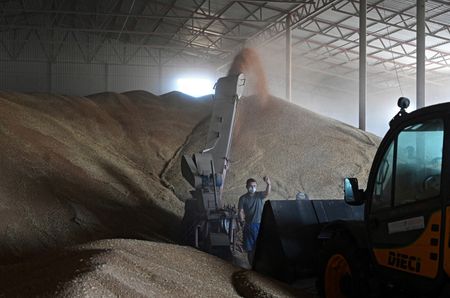
The situation is exacerbated by a relatively good harvest across Russia this year, with more than 100 million tons of grain already harvested compared to a total harvest of 141 million tons in 2025.
The People's Farmer lobby called on the government to cut the winter sowing area this year to cope with the oversupply of wheat at a meeting with government officials. The lobby group also asked for state compensation for such cuts.
"The reduction in sowing is definitely a breach of food security, because the process will be quite uncontrollable," the Agriculture Ministry's Borovoi said of the initiative.
(Writing by Gleb Bryanski; Editing by Jan Harvey)
Find it fast
Looking for more insights? Explore our other news sections for updates on sustainable finance, companies and financial education