Why Europe needs simpler transaction reporting
Drawing on its multi-jurisdictional experience, Euronext’s calls for a more efficient, coherent and cost-effective approach to regulatory reporting across the European Union. To make it happen, Euronext brought a number of constructive proposals to the European Securities and Markets Authority’s (ESMA) recent Call for Evidence on a Comprehensive Approach for the Simplification of Financial Transaction Reporting, sharing practical insights as Europe’s leading market infrastructure. As part of the broader legislative agenda, we believe that the European Commission’s upcoming legislative work on market integration must be treated as an opportunity to advance simpler reporting.
A fragmented framework driving complexity
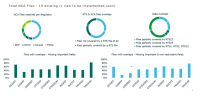
The difficulties created by a fragmented regulatory framework and a lack of alignment across regimes contribute to duplicative reporting obligations and increased operational complexity. Persistent complexities include overlapping and time-consuming reporting to different National Competent Authorities (NCAs) across Europe, as reports submitted to NCAs frequently contain data already provided to ESMA. Currently Euronext sends over one hundred files a day to its regulators and ESMA. A lot of the duplication and burden stems from direct reports and legacy files requested by NCAs prior to MiFID II. Duplication also occurs under different regulations, for example the same derivative instruments are reported under MiFIR, EMIR and REMIT.
Additionally, the multiplicity of data files and physical connections results in a large volume of data being sent several times, often using different formats and/or applications, necessitating separate physical connections with each NCA to transmit reporting information. Finally, there is a suboptimal allocation of reporting duties, which often fall on entities that may not be the most appropriate or best positioned to provide such information.
As a pan-European operator with multiple supervisory authorities, Euronext experiences these challenges first-hand. “The persistent complexity and lack of alignment across regimes translate into increased operational effort and limited data harmonisation,” Jakub Michalik, Chief Policy Officer at Euronext notes. “Addressing these issues is essential for achieving a truly efficient and coherent European reporting landscape.”
Overview of duplication at play in regulatory reporting – NCA files
Euronext’s vision for simplified transaction reporting
Building on this response, Euronext outlines a forward-looking vision for improving transaction reporting across the EU. Central to this vision are five key priorities:
The creation of a pan-European data hub under ESMA, or another designated entity, to eliminate the need for separate physical connections and multiple submissions to NCAs. A single technological platform would enhance data quality, improve supervisory coordination and significantly reduce duplication.
Any transaction should only be reported once: Consistency and efficiency should underpin the reporting process. Today, similar datasets are often reported several times under different regulations to different EU agencies. For example, trading venues report selected data under MiFIR RTS 24 to ESMA and similar data to ACER under the REMIT regulation. We propose that RTS 24 which covers order book data, and already has an exhaustive scope, serve as the reference framework and the model to converge toward.
Ensuring the right entities report the right data: Reporting responsibilities should rest with the organisations that actually hold the relevant information – for example, clearing houses on position reporting. This alignment would ensure higher-quality data and reduce the burden on entities lacking full visibility.
Streamlined frameworks with proportional requirements: Reporting frameworks should be kept as simple as possible, providing regulators with the necessary transparency without imposing excessive technical or operational burdens on reporting entities.
A clear roadmap for future simplification: in close collaboration with market participants so that ESMA’s work on this important area can be translated into action.
A shared objective of efficiency, coherence and cost-effectiveness
Euronext’s response to ESMA emphasises that simplifying financial transaction reporting is both an operational and strategic necessity. By reducing duplication, enhancing data consistency and improving coordination between authorities, the European regulatory reporting framework can become more efficient and streamlined. Such a well-coordinated reporting framework would benefit both regulators and the market as a whole. By acting together, Europe can build a reporting environment that supports market integrity, reduces costs and fosters competitiveness.
To reach the necessary objective, the European Commission’s upcoming legislative package on market integration, expected in early December, should be seen as a critical milestone in advancing these reforms.