Russia eyes diesel export ban, fuel imports amid Ukrainian strikes; Crimea restricts public life
MOSCOW, June 23 (Reuters) - Russia is considering a diesel export ban, Deputy Prime Minister Alexander Novak said on Tuesday, while a newspaper reported on possible fuel imports to tackle shortages, especially in Crimea, which tightened restrictions on public services and activities.
Russian President Vladimir Putin also made his first comments about Ukraine's recent strikes on civilian infrastructure, including on Moscow's oil refinery, saying they were a ploy to destabilise society.
He also called on the government to take additional measures to offset the consequences from the strikes.
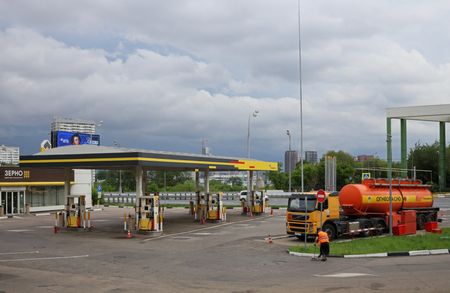
Numerous regions across Russia, the world's third-largest crude producer, have reported restrictions on fuel sales, rising prices of oil products and long queues at filling stations.
Russia normally exports various oil products as well as crude. However, Ukrainian attacks on its refineries have forced it to ban exports of gasoline and jet fuel.
The Vedomosti newspaper said imports were raised as an option at a meeting chaired by Deputy Prime Minister Alexander Novak on Monday.
Speaking at a televised government meeting headed by Putin on Tuesday, Novak said Russia was considering the introduction of a ban on diesel exports and changes to tax legislation to help the domestic fuel market.
Novak also said that oil companies had delayed maintenance work at refineries and were using fuel reserves to meet demand.
"We are using reserves that were not previously tapped, and are also encouraging increased supplies of additional volumes to the domestic market. Relevant amendments to tax legislation have been prepared in coordination with the government," he said.
Russia's seaborne diesel and gasoil exports rose 8% to around 3.25 million metric tons in April from March, however, down only slightly from 3.3 million tons the same month a year ago, according to data from market sources and LSEG.
Exports held steady in May, according to the data. Brazil and Turkey are among the main importers of Russia's diesel.
Two industry sources told Reuters that subsidies on imported fuel were considered with the aim of capping fuel prices, a sensitive issue for the public and an unwanted trigger for wider inflation.
Novak's office did not immediately reply to a request for comment.
SEVASTOPOL TIGHTENS LIMITS ON PUBLIC LIFE
The city of Sevastopol in Russian-controlled Crimea said it had restricted the operating hours of public transport, shops, cafes and street lights, and had also banned mass outdoor activities, in addition to previously announced fuel sale limits.
Mikhail Razvozhayev, the Russian-installed governor of Sevastopol, home to Russia's Black Sea Fleet, announced on Monday evening "enforced temporary measures", including the closure of public transport at 10 p.m., and of large shops and cafes at 8 p.m. Street lighting was dimmed.
Anzhelika, a resident of Crimea's largest city who gave only her first name, said the measures were good for public safety.
"On the street lights, I think that's the right thing to do, the protection of the city comes first," she said.
Russia's gasoline output last week was down about 25% from the daily average in June 2025, industry sources said.
According to LSEG data and market sources, its seaborne oil product exports were down about 15% in the first half of June compared to the first half of May, due to unplanned refinery maintenance after repeated drone attacks.
Last week, four industry sources said Russia was set to import fuel by sea in June as it seeks to manage the gasoline shortage.
(Reporting by Reuters; editing by Milla Nissi-Prussak, Kevin Liffey and Gareth Jones)
Find it fast
Looking for more insights? Explore our other news sections for updates on sustainable finance, companies and financial education