Oil prices fall nearly 2% as Middle East supply concerns ease
NEW YORK, Oct 6 (Reuters) - Oil prices fell nearly 2% on Tuesday as supply concerns eased due to increased Middle Eastern crude exports and an agreement by the Group of Seven countries to release emergency diesel and crude stockpiles.
Brent futures were down $1.84, or 1.8%, at $98.48 a barrel at 10:30 a.m. EDT (1430 GMT), while US West Texas Intermediate (WTI) crude fell $1.42, or 1.6%, to $88.01.
Those moves put Brent on track for its lowest close since September 8 and WTI on track for its lowest close since August 31.
"The price of the global crude benchmark, Brent, is once again toiling around $100/barrel, as its reasons for trading much beyond the psychological 3-digit mark are being eroded ... for now the assumption of more crude getting through has dampened price fervour," said John Evans, an analyst at oil broker PVM.
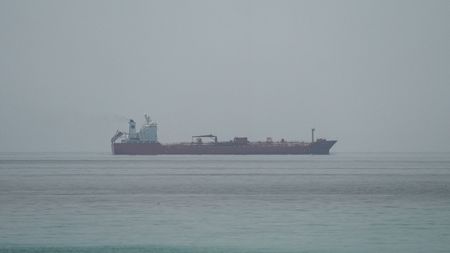
Around 12 million barrels per day of crude oil and 2 million bpd of refined products — volumes needed to dampen price pressure — have left the Middle East on tankers in the last 7 to 10 days, the CEO of commodity trading giant Vitol said on Tuesday.
Saudi Energy Minister Prince Abdulaziz bin Salman said on Tuesday that oil pumped through the East-West Pipeline, which runs to the kingdom's Red Sea export hub of Yanbu, had reached 5.8 million barrels as of Tuesday morning.
Oil price declines, however, have been limited by the possibility of further Middle East supply disruptions.
Saudi Arabia's airports in Jazan and Najran were targeted in two attacks on Monday evening, injuring three people and causing limited damage, the Saudi aviation authority said, as hostilities between the kingdom and Yemen's Iran-backed Houthis escalated.
The attacks occurred as Saudi-backed Yemeni government forces pressed a major offensive to retake territory from the Houthis after weeks of rebel advances, with Riyadh stepping up airstrikes in support of the campaign.
OIL STOCKS AROUND THE WORLD
The International Energy Agency will meet next week to work out the details of a diesel stock release as market confusion grows over how many barrels Europe and the US plan to make available to address shortages and record-high prices, sources said.
Under pressure from US President Donald Trump, the Group of Seven major economies agreed on Friday to release 100 million barrels of diesel and crude oil from emergency reserves and pledged to refrain from imposing energy export restrictions.
The G7, however, did not provide a breakdown of the volumes of crude, diesel and other products to be released, or say which countries would participate.
In the US, meanwhile, the oil market was watching for weekly storage reports from the American Petroleum Institute trade group on Tuesday and the US Energy Information Administration on Wednesday.
Analysts estimated energy firms added 1.8 million barrels of crude to US storage during the week ended October 2.
If correct, it would mark the first time since August that crude stocks increased for three weeks in a row and compare with an increase of 3.7 million barrels in the same week last year and an average increase of 1.7 million barrels over the past five years (2021 to 2025). [EIA/S] [API/S]
(Reporting by Scott DiSavino in New York and Alex Lawler in London; Additional reporting by Sumit Saha in Bengaluru and Emily Chow in Singapore; Editing by Joe Bavier, Susan Fenton and Paul Simao)
Find it fast
Looking for more insights? Explore our other news sections for updates on sustainable finance, companies and financial education