Italy's top court upholds shutdown of former Ilva steelworks, in setback to Meloni
By Giselda Vagnoni and Marco Roberti
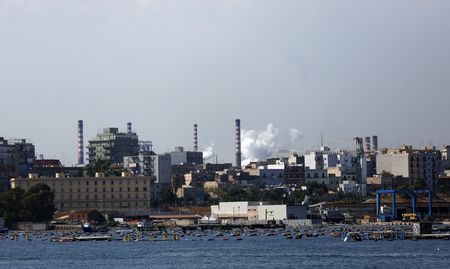
ROME, Oct 29 (Reuters) - Italy's Supreme Court upheld a lower court ruling ordering the shutdown of blast furnaces at the former Ilva steelworks in the southern city of Taranto, on health and environmental grounds, the court's written decision showed on Thursday.
The ruling hampers efforts by Prime Minister Giorgia Meloni's government to rescue the country's largest steelmaker, adding uncertainty for the plant and its roughly 8,000 direct employees less than a year before a general election.
The Supreme Court of Cassation rejected an appeal against a Milan court ruling, which had ordered the furnaces to be shut, describing the ruling as "correct and reasonable" in its written decision.
Meloni has repeatedly pledged support for the facility, saying her government would do whatever it could to safeguard production. She has said Rome has committed around €5 billion ($5.6 billion) to the steelmaker since taking office in 2022.
Meloni's office said the ruling on Thursday "further complicates a process that has become increasingly difficult and has been beset by obstacles of every kind.”
'WE HAVE WON', ACTIVISTS SAY
Environmental and health concerns have dogged the steelworks for decades, making it one of Italy's most politically sensitive industrial disputes.
Genitori Tarantini (Taranto parents), the campaign group that brought the legal challenge, welcomed the decision, saying on Facebook: “The lives of Taranto residents matter to the Cassation judges too. We have won.”
Acciaierie d'Italia (ADI), formerly Ilva, operates Italy's only integrated steelworks and is considered an important part of Italy's manufacturing sector.
The company had previously warned that closing the blast furnaces could lead to the permanent shutdown of the plant, once Europe's largest steelworks.
Taranto Mayor Piero Bitetti said the ruling put “a tombstone on the hot end” of the former Ilva steelworks, calling for measures to protect jobs and workers’ families, clean up the site and attract new investment.
The ruling risks complicating ADI's sale process that is under way.
“Sourcing raw materials from other hot-end facilities risks adding costs that could make the investment economically unsustainable,” said Carlo Mapelli, professor of metallurgy at Milan Polytechnic and former ADI board member.
The government recently extended the deadline for binding bids to November 9 to allow potential investors to assess the legal and industrial implications of the court case.
India's Jindal Steel International is considered the frontrunner, while a consortium of Italian steelmakers coordinated by industry body Federacciai has expressed interest mainly in selected assets.
(Reporting by Marco Roberti and Giselda Vagnoni, editing by Gavin Jones, Xevi Fontdegloria and Elaine Hardcastle)
Find it fast
Looking for more insights? Explore our other news sections for updates on sustainable finance, companies and financial education