IKEA's Danish stores could become shelters as Europe boosts preparedness
By Soren Jeppesen and Agnieszka Olenska
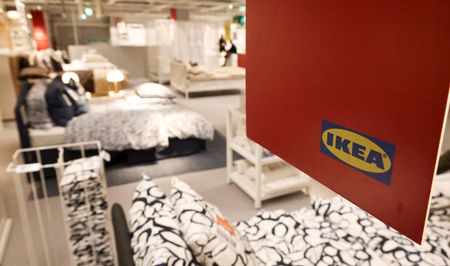
COPENHAGEN, Oct 9 (Reuters) - In the bedding department of Denmark's largest IKEA store, security chief Torben Mortensen walks past rows of display beds and describes a use for them far removed from retail: emergency shelter.
If a blackout, flood or attack on critical infrastructure struck, IKEA could turn its stores into emergency shelters or even temporary hospitals. Restaurants could provide meals, generators could keep the buildings running and extra beds could be assembled from flat packs pulled from warehouse shelves.
The idea reflects a broader shift in how Europe is thinking about security, with governments increasingly looking beyond armed forces and emergency services to businesses that can help keep societies functioning during a crisis.
A wave of suspected sabotage, cyber attacks and other incidents that European officials have linked to Russian hybrid warfare has added urgency to those efforts. Denmark's intelligence service has warned Russia is likely to intensify such activities against NATO countries and other Western states in the coming months, an accusation Moscow denies.
"We want to be the good neighbour. We want to be the company that can support society in case of a crisis," Mortensen said.
The European Union is encouraging member states to work more closely with businesses as part of its Preparedness Union Strategy, launched in March 2025.
IKEA is part of Denmark's Corporate Coalition for Crisis Preparedness, a network that catalogues what private firms can provide in an emergency, from beds and food supplies to trucks and specialist staff.
"IKEA is a very good example because nobody would put them naturally on a list of crisis resources ... An IKEA store has space, goods, food facilities, and generators," said Maja Broloes, CEO of the network.
The concept is not purely theoretical. During deadly floods in Valencia, Spain, in October 2024, IKEA turned one of its stores into a shelter for more than 600 people.
The retailer said it did not have a global preparedness programme and that such arrangements were managed country by country.
BUSINESS AS BACKUP
Other Danish retailers are also preparing for emergencies. Salling Group, Denmark's largest supermarket operator, is opening the first of 51 stores designed to operate for up to 48 hours without electricity or internet access.
The trend extends beyond Denmark.
Estonia requires 300 companies by law to maintain critical services during a crisis, while Finland has a network of authorities, NGOs and companies responsible for supply security. In Poland, some companies are required by law to let the armed forces use their vehicles, machinery and property in a crisis.
The Danish network includes more than 200 companies employing more than 300,000 people, from retailers and construction groups to telecoms providers.
"If a crisis hits, the authorities will have one place to ask, and we find companies that can help," Broloes said.
She said a state-backed compensation scheme was being established, with reimbursement determined on a case-by-case basis.
The voluntary network has taken part in preparedness exercises with government authorities but has yet to face a major real-world emergency.
Still, there has already been a glimpse of how a Danish IKEA store might function as a shelter.
In December 2021, a snowstorm trapped six customers and about two dozen employees overnight at an IKEA store in Aalborg, forcing them to sleep in the display beds.
By the next morning, staff had changed the sheets and reopened the store to shoppers.
(Reporting by Soren Jeppesen, Agnieszka Olenska and Tom Little in Copenhagen. Additional reporting by Greta Fondahn in Stokholm. Editing by Jacob Gronholt-Pedersen and Mark Potter)
Find it fast
Looking for more insights? Explore our other news sections for updates on sustainable finance, companies and financial education