Germany's Schroeder, long criticised for Putin ties, joins board of Russian retailer
By Gleb Stolyarov and Mark Trevelyan
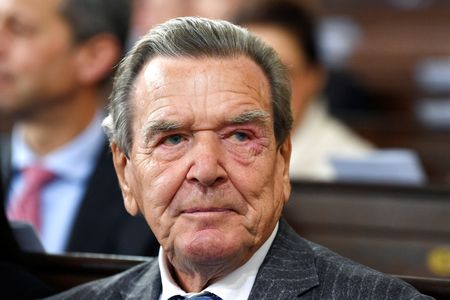
Oct 2 (Reuters) - Former German Chancellor Gerhard Schroeder, who has faced criticism over his links to Russian business and President Vladimir Putin, has joined the supervisory board of Russian retailer Hyperglobus, the company said on Friday.
Schroeder formed a close relationship with Putin while serving as German chancellor from 1998 to 2005 and later working for Russian state companies.
Hyperglobus was spun off from Germany's Globus Holding in 2025 and is now fully independent, according to Globus. It operates more than 20 Russian supermarkets that continue to use the Globus brand.
The announcement of Schroeder's appointment came four days after Putin issued a decree placing the Russian assets of another big German retailer, Metro, under temporary administration – the latest in a series of moves against businesses from countries that have supported Ukraine against Russia in the war.
The former German chancellor, 82, would be responsible for supporting the strategic development of the business and would be involved in the overall management, Hyperglobus said in a statement.
"Thanks to his many years of involvement in Russia's political, economic and cultural life, he will be an ideal addition to the board and help us continue our dialogue-oriented approach," it cited Thomas Bruch, the owner of Hyperglobus and former head of Globus, as saying.
CHAMPION OF CLOSER ENERGY TIES
As chancellor, Schroeder championed closer energy ties with Russia that critics said made Germany over-dependent on Moscow's oil and gas. He later held senior positions in ventures including Russian state oil firm Rosneft and the Nord Stream gas pipeline projects.
"It is important that entrepreneurs like Thomas Bruch and companies like Globus continue to maintain economic ties and invest in Russia," Schroeder said in the statement.
"This is particularly important in such a fundamental area as ensuring the food supply for the population."
When Russia invaded Ukraine in 2022, Germany stripped Schroeder of his taxpayer-funded parliamentary office and staff amid public outrage over his continued involvement in Russian business and his refusal to condemn Putin.
Schroeder stepped down that year from the board of oil group Rosneft and abandoned plans to join the board of Gazprom.
Earlier this year, Putin said Schroeder would be his preferred interlocutor for talks on new security arrangements for Europe, an idea immediately rejected by the European Union.
The Kremlin said in June that Putin and Schroeder had held a friendly one-on-one meeting, but gave no details.
(Additional reporting by Matthias Inverardi and Kirsti Knolle; Writing by Mark Trevelyan and Gleb Stolyarov)
Find it fast
Looking for more insights? Explore our other news sections for updates on sustainable finance, companies and financial education