Germany's Merz promises relief plan 'soon' as pump prices hit record
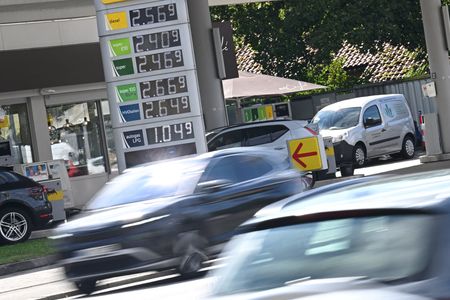
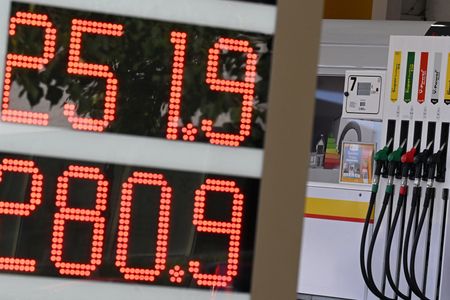
BERLIN, Sept 15 (Reuters) - Embattled German Chancellor Friedrich Merz promised on Tuesday that proposals to shield consumers from record fuel prices were coming "very soon" as he looks to address citizens' worries ahead of a closely watched state election.
Merz is under pressure as his Christian Democrats (CDU) face the prospect of their worst state election result ever in the predominantly rural Mecklenburg-Western Pomerania on Sunday.
"For many people who rely on their cars every day, the limit of what they can bear has been reached," Merz told a business event, a day after the nationwide daily average price for a litre of E10 gasoline hit a record €2.286 ($10 per gallon).
Prices have soared since the Middle East conflict began in late February.
Merz gave no details of how any intervention would work but said he was consulting with the 16 federal states and coalition partners in Berlin.
Finance Minister Lars Klingbeil, who will press for a windfall tax on European energy firms at an informal meeting of EU finance ministers, said on Tuesday he did not yet know what Merz's proposals were, but that decisions must be reached quickly.
Discussion of a price cap, backed by Klingbeil's centre-left Social Democrats, has met resistance from the CDU-led economy ministry, which says it would be difficult to implement.
The government offered some relief earlier this year by reducing energy tax from May through June, effectively lowering petrol and diesel prices by around 17 cents per litre.
STATE PREMIER CALLS FOR PRICE CAP
Merz has vowed to connect better with voters after his party was trounced in a state election this month that handed a historic win to the far-right Alternative for Germany (AfD).
The chancellor has repeatedly said he plans to serve out his full four-year term, and his conservatives plan to meet on Sunday to rally behind him, according to a party source.
Manuela Schwesig, the SPD state premier of Mecklenburg-Western Pomerania hoping for another term, has accused Merz's government of standing by while fuel prices surge, and called for a fuel price cap based on the Luxembourg model of a nationwide maximum. ($1 = 0.8665 euros)
(Reporting by Andreas Rinke, Miranda Murray and Cian Muenster; Editing by Kevin Liffey)
Find it fast
Looking for more insights? Explore our other news sections for updates on sustainable finance, companies and financial education