Budget overhaul set to be Hungary PM Magyar's first major credibility test
By Gergely Szakacs and Marc Jones
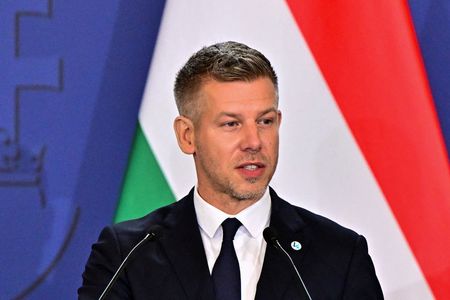
BUDAPEST/LONDON, July 8 (Reuters) - Hungarian Prime Minister Peter Magyar faces his first major credibility test with a looming budget plan that needs to cut spending while honouring voter pledges that helped secure his landslide election win over Viktor Orban.
Magyar ousted the right-wing Orban in April, with promises to unlock billions of euros worth of European Union funding and to put the country on a path towards joining the euro.
Local share markets have rallied since the win, the forint has become central Europe's best performing currency, and the government's borrowing costs have plunged to below those of higher 'A'-rated Poland's.
Reports last week, however, that the budget deficit could top 7% of GDP again this year due to Orban's pre-election spending has left Magyar with some difficult choices ahead of his government's first budget, due by the end of August.
It will also be followed by a medium-term fiscal plan that will lay out how Budapest aims to get the deficit down to 3% — a requirement for countries wanting to join Europe's shared currency.
"This will be the first real test of the government's fiscal credibility," Capital Economics analyst Liam Peach said about the looming budget plan.
"The recent (deficit) warnings seem intended to shape expectations for what is likely to be a painful set of fiscal tightening measures."
The Finance Ministry did not respond to emailed questions about how it would reconcile the competing objectives.
While Magyar needs to rein in what is likely to be the EU's largest deficit, he knows he also needs to maintain his popularity if his agenda is to ultimately be successful.
A Median survey last week put support for his Tisza party at 73% of decided voters compared with just 21% for Orban's Fidesz.
"Tisza is extremely popular currently, but fiscal consolidation has not even started," economists at Wood & Company said in a research note.
They warned that measures to slow wage growth and cuts to interest rate subsidies on mortgages would be painful for a sizeable part of the electorate, but would be crucial if Hungary is serious about joining the euro.
DIFFICULT STARTING POSITION
Citi economist Piotr Kalisz also sees the budget cuts as a crucial test for Magyar.To keep the 2030 target for meeting the euro entry 'Maastricht' criteria realistic, the government would need to demonstrate at least a 1% of GDP reduction in the fiscal deficit in 2027 versus 2026 and a clear plan for beyond that, he said.
"A reduction of 0.6% to 1% would align with meeting (euro adoption) criteria, albeit later than 2030. Conversely, tightening less than 0.6% in 2027 would signal that euro adoption is no longer a top government priority," Kalisz said.
Fitch Ratings analyst Malgorzata Krzywicka said the drop in Hungary's borrowing costs was helpful but cautioned that other key planks of Magyar's cost-cutting plans, such as reviewing state contracts and expenditure, remained uncertain.
S&P Global analysts added that exiting the EU's Excessive Deficit Procedure by 2030 would be "challenging" given Hungary's "weak" fiscal starting point.
Absent a medium-term fiscal plan that includes cost control, the budgetary trajectory could also become "less predictable and more vulnerable to external shocks," they said.
(Reporting by Gergely Szakacs and Marc Jones; Editing by Kevin Buckland)
Find it fast
Looking for more insights? Explore our other news sections for updates on sustainable finance, companies and financial education