Analysis-Spain's economic gains miss voters' wallets as Sanchez seeks reelection
By Victoria Waldersee
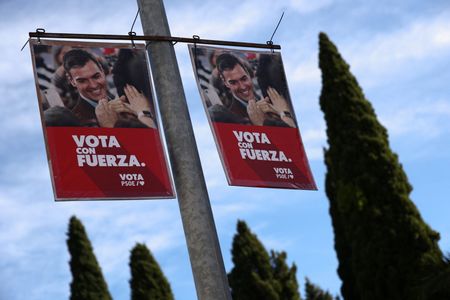
OLIVA DE LA FRONTERA, Spain, Nov 26 (Reuters) - On paper, life in Spain's southwestern region of Extremadura, a historic left-wing heartland and one of Spain's poorest areas, has improved significantly under Prime Minister Pedro Sanchez's Socialist-led government standing for reelection on Sunday.
Like the rest of the country, its economy has grown and salaries have jumped by 66% for minimum-wage workers and over 20% for state employees. Labour reforms limiting seasonal work have stabilised incomes in the agriculture and tourism sectors, which dominate employment in the region.
Yet Extremadura also shows why Spaniards across the country say they do not feel those headline economic gains in their everyday lives — and why the economy could yet work against Sanchez at the polls.
Rising prices for housing, energy and consumer goods have eaten into wage gains. The increases are due in part to external shocks, from the COVID-19 pandemic to the US-Iran war, which have squeezed households and driven unrest across Europe.
Meanwhile, the same reforms that lifted salaries for millions of workers have raised costs for small businesses, which make up 95% of Spain's companies and are already battling higher costs elsewhere.
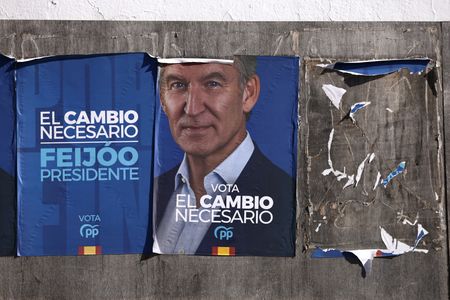
That has left voters in Extremadura and across Spain unsure whether to trust Sanchez's Socialists again. Polls show the conservative People's Party (PP) and far-right Vox on course to win a majority nationwide and leading in the region.
After eight years in office, two fatal train crashes and a series of corruption scandals in his inner circle, Sanchez has lost credibility, said Rufino Cuecas Morujo, the 53-year-old founder of a cheese shop in the Extremadura village of Oliva de la Frontera.
"I've always been a leftist. I don't like the extremes. But it's time for a change," said Cuecas Morujo. He said he is likely to vote for the PP after the regional government, which the party has run with Vox since April, lowered taxes for small businesses like his.'INFLATION OVERWHELMS EVERYTHING'
At first glance, Spain's headline economic figures paint a positive picture: it has topped growth among advanced economies globally for three years running, created around 41% of all jobs added across the EU last year and narrowed its deficit from 3.3% in 2023 to an expected 2.6% in 2026, according to government figures and the IMF.
Yet per capita income growth has not kept pace, with Spaniards still lagging behind the EU average on purchasing power, according to Eurostat data.
While more Spaniards than ever are in work, and employment is rising in high-wage sectors, real wages fell slightly, by 0.3% on average, between 2019 and 2025, according to a CaixaBank analysis.
The share of Spaniards at risk of poverty and social exclusion has barely budged in the past decade despite wage gains, partly because of inflation, the report said.
"It makes me mad to hear that our economy is perceived as doing well because I'm not doing any better," said Olga Maria Manzano, a small business owner in Extremadura renting out countryside homes to tourists.
Inflation stood at 4.9% in October, the highest since February 2023, according to the National Statistics Institute. It had averaged 2.75% from the start of Sanchez's most recent term in 2023 until the Iran war broke out in February.
"Increases in employment or improved wages seem to count for little in public perception of the economy when inflation overwhelms everything else," said Juan Francisco Caro, director at social research institute Opina360. 'PROSPERITY IS NOT BEING SHARED ADEQUATELY'
Polls show many will be voting with their wallets on Sunday, with housing, economic problems and the quality of work emerging as the top concerns in a November survey by state-run pollster CIS, ahead of immigration.
Consumer confidence, considered positive when higher than 100, has dropped from 107 when Sanchez took office in June 2018 to 84.1 in CIS's latest survey for July 2026.
Leading politicians in Spain's Socialist Party have acknowledged that growth has not trickled down evenly. Some blame regional governments, most of them run by the PP, which have jurisdiction over key policy areas like healthcare, education and housing.
"Spain is generating prosperity. The economy is working in macroeconomic terms, much better than those around us. But that prosperity is not being shared adequately in terms of reaching certain layers of society or territories," Salvador Illa, a leading Socialist politician and president of Catalonia, told Reuters.
The PP has pledged to increase Spain's average salary to €50,000 ($54,700) from its current level of around €29,500, but has not provided specific plans for how it will do so. Economy Minister Carlos Cuerpo accused the party in a recent television debate of misleading voters with "delusional" promises.
Vox has proposed wide-ranging tax cuts it says will boost the economy, paid for by stripping unions and parties of funding and restricting welfare payments to Spanish citizens. It has also not provided specific costings.
For Manzano, the desire for change outweighs any misgivings she has about Vox.
"Do I have different ideas (to Vox)? Sure. But we need to co-exist," Manzano said. "We just need change, whoever it is."
($1 = 0.9136 euros)
(Reporting by Victoria Waldersee, additional reporting by Charlie Devereux, Corina Pons; Editing by Xevi Fontdegloria)
Find it fast
Looking for more insights? Explore our other news sections for updates on sustainable finance, companies and financial education