Analysis-As Iran war drags on, airlines pull back on fuel hedges and warn on fares
By Joanna Plucinska, Gianluca Lo Nostro and Julie Zhu
LONDON/HONG KONG, Oct 28 (Reuters) - With jet fuel prices at roughly double their levels before the Iran war, airlines are growing increasingly reluctant to lock in future fuel costs through new hedges, warning instead of steep fare increases to offset higher fuel bills.
Hedging allows airlines to lock in future fuel prices, helping shield them from increases and providing greater certainty over costs. But some programmes require premiums, collateral or other costs, while airlines that hedge at current elevated prices risk being locked into expensive fuel if geopolitical tensions ease and prices retreat.
As the conflict in the Middle East enters its ninth month, the strategy shift means fliers globally will likely pay far higher air fares as carriers lose their hedging protection, testing consumer willingness to shell out more for travel.
"Most hedging is finishing," AirAsia CEO Tony Fernandes told Reuters this month, adding the Malaysian airline was budgeting for 12 months of high oil prices and had "given up trying to predict" how geopolitical tensions would evolve.
He said the firm was not even modelling a scenario where oil prices fall.
"So everyone's going to be exposed. There's only one way or two ways of dealing with that: cut costs or raise fares."
Finland's Finnair, which said this month that high fuel costs had fed through to ticket prices, has stopped adding new hedges as fuel costs surged this year. It has an average hedging ratio of 34% for 2027.
"With such high prices, how do you then lock in low prices again?" finance chief Pia Aaltonen-Forsell said on Tuesday. "If we add right now, it's more expensive."
NO EUROPEAN AIRLINE WELL HEDGED THROUGH 2027, RYANAIR SAYS
Jet fuel accounts for between 30% and 40% of airlines' costs, with European and Asian carriers historically hedging more of their fuel needs than US rivals, which largely abandoned the practice after costly bets on oil prices backfired.
"You have stability of cost when you hedge," said Jeffrey Goh, managing director at Alton Aviation, adding it remained a bet on prices rising — and could backfire. "You have to look at the forward curve and predict how fast it might go down."
The pressure could intensify in 2027 as hedges put in place before the war expire, exposing airlines more fully to current fuel prices.
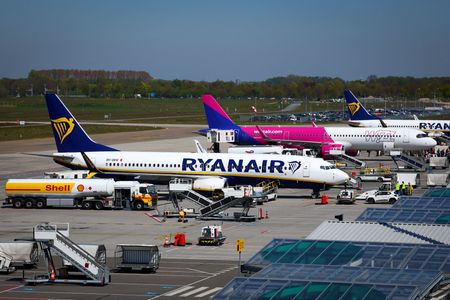
"None of the European airlines, including Ryanair, are well-hedged until summer of 2027, so I think you're going to have to see air fares rise by 15% to 20%," Ryanair CEO Michael O'Leary told reporters earlier this month.
Ryanair said in September it had stopped hedging. Europe's largest airline has hedged about 80% of its jet fuel needs for the year ending March 2027.
In a sign of challenges airlines may face pushing higher fares, budget carrier Norwegian Air Shuttle said on Wednesday it had been forced to undo some post-Iran war price hikes because customers "were not willing to pay".
FUEL HEDGING NOT A 'COMPLETE SOLUTION'
Globally, airline hedging policies remain fragmented, with some carriers expanding programmes since the war began and others dialling them back.
Carriers with weak balance sheets also often have less flexibility to absorb the costs associated with hedging and can be fully exposed to fuel-price movements, contributing to a flurry of recent bankruptcy and insolvency filings.
US airlines have largely shown little appetite to return to hedging despite this year's fuel shock. Analysts say US consumers tend to be less price sensitive than travellers in other regions and the most willing to absorb higher fares.
Air fares in the European Union rose 5.8% year-on-year in September, the latest official data show. US air fares, meanwhile, were up more than 20% year-on-year in the month.
American, United, Delta, JetBlue and Allegiant have no material fuel hedges, while Frontier has no active hedging position. Southwest ended its long-running programme last year, while Alaska and Hawaiian also closed out remaining positions.
The reluctance of some European and Asian airlines to add new hedges could signal a broader shift in industry attitudes towards fuel hedging, although this year's fuel-price spike has also highlighted the risks of remaining exposed to fuel markets.
Delta, United and Southwest all cut profit targets or disappointed investors with their earnings outlooks this month as fuel expenses climbed.
Despite hedging more than 70% of their jet fuel needs for this year, Ryanair and Lufthansa cut capacity on some routes to limit the impact of unhedged fuel costs.
"Fuel remains the single largest area of uncertainty in the outlook," said Air New Zealand Chief Financial Officer Kris Cudmore. "Our hedging program provides some nearer term protection, but it is far from a complete solution."
(Additional reporting by Phil Blenkinsop in Brussels, Rajesh Kumar Singh in Chicago and Julie Zhu in Hong Kong and Essi Lehto in Helsinki; Editing by Adam Jourdan and Mark Potter)
Find it fast
Looking for more insights? Explore our other news sections for updates on sustainable finance, companies and financial education