Global airports court private capital to fund upgrades, raising cost concerns
By Allison Lampert
MONTREAL, Nov 25 (Reuters) - Global airports are banking on increased private investment to help cover trillions of dollars in expected long-term spending to refresh and expand aging terminals and build new ones, although industry officials warn such ventures risk higher costs.
While private investment has flowed for decades into aviation infrastructure, such partnerships are gaining renewed attention as tight public budgets leave aging airports and control towers unprepared for an expected doubling of passenger travel by 2050.
More than $4 trillion is expected to be spent over the next 30 years on such infrastructure, according to data from trade group Airports Council International presented at a UN aviation gathering in Montreal last week.
"We need to have investment in the industry and we can't rely only on government investment, so we need to have private investment," ACI Director General Justin Erbacci said in an interview.
But airlines and industry groups have raised concerns about partnerships with the private sector, given cases of earlier ventures raising airline fees that carriers typically pass on through higher ticket prices.
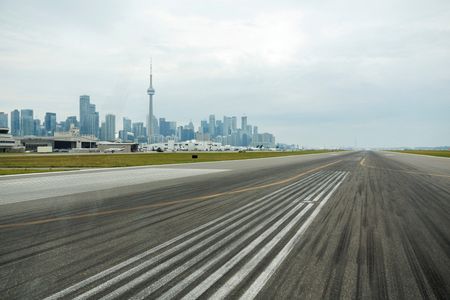
In Canada, where the government is seeking private investment for its Toronto, Montreal, Vancouver and Calgary airports, labor groups have raised alarm over higher costs seen in other countries.
Australian airlines have called for increased oversight to cap fees, decades after the government sold airports in Sydney, Melbourne, Brisbane and Perth to pension funds and infrastructure investors.
“Private investors need to make a profit, and that money has to come from somewhere," said Lily Chang, secretary-treasurer of the Canadian Labour Congress.
Indonesia's InJourney, a state-owned holding company that manages 35 airports as well as hotels, is considering whether to bring in a private partner for the first time, a top executive said.
But control remains a concern because "with airports, we have to think about safety, security, borders into our countries," InJourney CEO Maya Watono said in an interview. "We are very careful with airports."
TRANSPARENT PROCESS
While airlines do not oppose privatizing airports or control towers, they want a transparent process that does not lead to soaring costs, according to airline trade group IATA.
"We as users need to be consulted throughout the process, which is not always the case in many countries," said Thomas Reynaert, IATA's senior vice president of external affairs. "At the end of the day we're getting the bill."
As airline traffic rises and government budgets tighten, the global proportion of passengers flying through airports with private-sector participation has grown to about 50%, up from 41% a decade ago, according to ACI.
Most private investment has gone into brownfield projects that expand or rehabilitate existing airports because they offer lower risk and provide investors with predictable cash flows. But other countries with fast-growing aviation markets are looking to private investment to support new construction.
Kazakhstan has about eight foreign companies investing in its aviation sector, said Talgat Lastayev, the country's vice minister of transport. The country is talking with potential private partners for a consortium to build a new airport in its capital Astana, he said.
Lastayev said the country signs investment agreements that give assurances and tax breaks to investors while the government regulates airport fees.
"We always try to keep the balance" between airlines and airports, he said.
BIG RISK
In Syria, where passengers flying into Aleppo International Airport see bombed-out buildings and crumbled rooftops from the sky before landing on a bumpy runway, the country is attracting some Saudi Arabia-based investors betting on its recovery.
Ahmad BinDawood, a board member at the private-sector Elaf Investment Fund, said it was investing an estimated $1 billion to build a new airport in the city that could support more than 12 million passengers a year and cargo operations.
The project is a bet for the company given conditions after years of war in the country.
“When we started, when we said that we wanted to go to Syria, everyone was skeptical about it and everyone was saying that guys, you are taking a risk," he said. "But our bet is that Syria is going to surprise everyone in a very short time.”
(Reporting by Allison Lampert in Montreal; Additional reporting by Joanna Plucinska in Damascus; Editing by Jamie Freed)
Find it fast
Looking for more insights? Explore our other news sections for updates on sustainable finance, companies and financial education