Russia turns to Arctic WW2 route to export grain
By Gleb Stolyarov and Olga Popova
MOSCOW, Oct 28 (Reuters) - Russia, the world's largest wheat exporter, has turned to an Arctic World War II shipping route to export grain for the first time as the conflict in Ukraine stalls Black Sea trade and officials warn of risks in the NATO-controlled Baltic Sea.
Russia and Ukraine have been attacking each other's ports and vessels since the new grain marketing season started in July, bringing the once booming Black Sea agriculture trade to a standstill.
Russia, keen to keep its key grain customers in the Middle East and Asia, sought to reroute exports to Baltic Sea ports, subsidising rail transport from fertile southern regions, but also eyed opportunities in the Arctic.
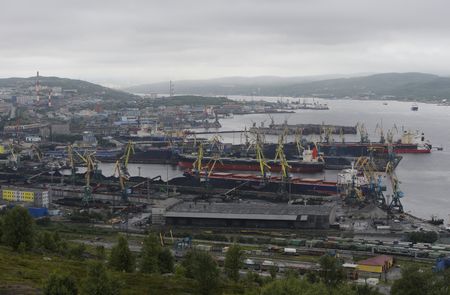
Murmansk Commercial Seaport and Demetra Holding, one of the country's largest trading firms, said on Wednesday that the first shipment of 3,400 metric tons of grain from "key agricultural regions" is being loaded onto a vessel.
Murmansk, which is located almost 2,000 km (1,240 miles) north of Moscow near the border with Norway, can be approached through neutral waters. Allied convoys used the port during World War II to deliver goods to the Soviet Union.
"At a time when traditional export routes are facing restrictions, Murmansk Commercial Seaport is swiftly opening up an alternative route to foreign markets for Russian farmers," the port said.
BALTIC SEA RISKS
According to shipping data and a market source, around 28,000 metric tons of wheat are due to be loaded in Murmansk onto a vessel heading to Morocco's Casablanca port.
Russia has rerouted its trade mostly to the Baltic Sea ports, which handled 1.2 million tons in September, accounting for over 60% of all seaborne grain exports. Companies have been repurposing fertiliser and coal terminals to handle grain.
Some Kremlin officials have warned of risks from potential hostile actions by European NATO member countries in the area. All countries with access to the Baltic Sea except Russia are NATO members.
Russia's relations with Europe have deteriorated in recent months as the Kremlin accused European countries of direct military involvement in the conflict in Ukraine.
European governments have rejected Russian accusations that they are directly involved, saying their military and financial support for Ukraine is aimed at helping Kyiv defend itself.
Turkey, an importer of grain from Russia, led the effort to introduce a ceasefire and resume shipments in the Black Sea, but Russia said it is no longer interested in a new Black Sea grain deal.
Turkey and the United Nations helped mediate the Black Sea Grain Initiative, which was agreed in July 2022 to allow the safe export of Ukrainian grain via the Black Sea.
Russia withdrew from the agreement in 2023, complaining that its own food and fertiliser exports faced obstacles.
(Additional reporting by Natalia Chumakova; Writing by Gleb Stolyarov and Gleb Bryanski; Editing by Sharon Singleton)
Find it fast
Looking for more insights? Explore our other news sections for updates on sustainable finance, companies and financial education