ECB policymakers warn about growing inflation risks
FRANKFURT, July 24 (Reuters) - Inflation risks are high and the European Central Bank may need to raise interest rates again in response to the Iran crisis, three policymakers said on Friday, but all stopped short of calling for a hike at the bank's next meeting in September.
The ECB left its key deposit rate at 2.25% on Thursday after a raft of surveys and data, mostly from June, showed higher fuel costs from the Middle East were not yet spreading broadly to consumer prices, wages and long-term expectations.
But there were strong clues that a hike in September was likely, with oil prices back around $100 a barrel and natural gas prices also surging.
Policymakers, so far, have been measured in their public commentary.
"We are seeing in the Middle East that the situation remains highly fragile," Bundesbank President Joachim Nagel said in a statement. "We are still facing intense uncertainty."
Nagel said the hike in June put the ECB in a good position to respond to any deterioration in the inflation outlook.
RISKS REMAIN HIGH
The ECB said on Thursday that risks to economic growth were skewed towards more negative outcomes than projected while inflation risks were to the upside.
"The risks ahead remain high," Slovenian central bank chief Primož Dolenc said in a blog post, adding that developments around the war in Iran reinforce the adverse risk.
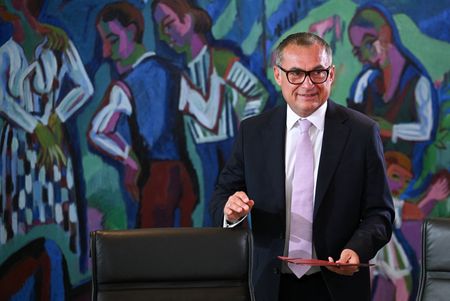
Austrian central bank chief Martin Kocher, meanwhile, said a hike may become needed but it was not clear if it would be in September.
"I think everybody knows if the inflation outlook becomes worse, if there is a situation where inflation expectations deteriorate, for instance, the medium-term ones, then there is a necessity to act," he told Bloomberg TV.
Financial markets see at least two more rate hikes from the ECB with the first move fully priced in by October and the second by February. Market economists polled by Reuters, however, only see a single hike in September.
IMPROVEMENT BEFORE IRAN TRUCE COLLAPSED
ECB polls of companies, consumers and economists were all pointing to a moderation in the inflation outlook, although they were all carried out before a truce in the Middle East collapsed earlier this month, raising oil prices again and rekindling inflation fears.
A broader survey of purchasing managers also showed activity was rebounding and inflationary pressures were easing.
"But given the re-escalation in the conflict in the Middle East and the subsequent rise in energy prices, some of the improvements in both may be short-lived," Capital Economics said in a note.
Oil prices were moving near the baseline of the ECB's June projections, which were predicated on more policy tightening in the months ahead.
(Reporting by Balazs Koranyi, Francesco Canepa and Francois Murphy; Editing by Kirsten Donovan, Jamie Freed and Hugh Lawson)
Find it fast
Looking for more insights? Explore our other news sections for updates on sustainable finance, companies and financial education