Winter will be key for judging UK inflation risks, BoE's Dhingra says
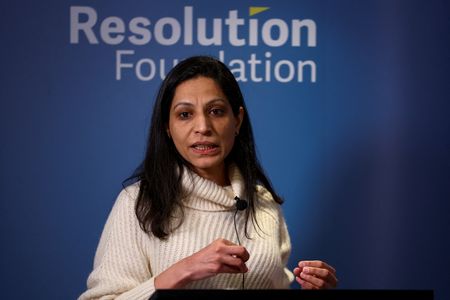
LONDON, Sept 24 (Reuters) - Bank of England interest rate-setter Swati Dhingra said on Thursday that the extent of long-term inflation pressures in Britain caused by the Iran war would become clearer over the coming winter months.
Dhingra said Britain was not experiencing the kind of broad-based price rises that occurred in 2022, when energy prices jumped in response to Russia's full-scale invasion of Ukraine, and that the country's jobs market was now weaker.
"I think the timing issue here is that we're going to know from the winter energy crisis what happens there. We're going to know much more about wage settlements and where they end up at, and financial tightening (is) already underway," she told a conference organised by the National Institute of Economic and Social Research, a think tank.
She said signals on wage settlements and other medium-term inflation drivers should start to become clearer before the end of 2026 and pushed back at the idea that hiking rates early was important for the BoE's inflation-fighting credibility.
Dhingra was one of the strongest advocates of lowering borrowing costs when the BoE was cutting rates. More recently, she has voted with the majority of the Monetary Policy Committee to keep borrowing costs on hold.
She told Thursday's conference that despite a "clamour" to follow the European Central Bank and the Federal Reserve by raising rates, the BoE was justified in staying on hold given that demand levels in Britain's economy were below those of the U.S. and benchmark rates were higher than in the euro zone.
Dhingra also said she would not be surprised if the rise in use of artificial intelligence led to lower inflation in Britain's services sector.
UK medium-term inflation expectations were not a cause for alarm, she added.
Investors are assigning an almost 75% chance of the BoE raising its Bank Rate by a quarter of a percentage point at its next meeting in November. Another hike was fully priced in by February.
Earlier on Thursday, BoE Deputy Governor Clare Lombardelli said rates would probably have to rise if energy prices stayed high, barring clear evidence of a weakening in the economy.
(Reporting by David MillikenWriting by William Schomberg)
Find it fast
Looking for more insights? Explore our other news sections for updates on sustainable finance, companies and financial education