Oil steadies as Middle East crude exports rise and G7 to release stocks
By Seher Dareen
LONDON, Oct 5 (Reuters) - Oil prices inched higher in volatile trade on Monday after crude exports from the Middle East increased and the Group of Seven nations pledged to boost supplies, although concerns about ongoing disruption linked to the US-Israeli war on Iran limited selling.
Brent crude futures inched up 5 cents to $102.30 a barrel at 0900 GMT, while US West Texas Intermediate crude was at $90.62 a barrel, down 49 cents, or 0.5%. Both contracts fell over 1% earlier in the session.
Brent gave up most of its gains last week and WTI was 1.6% lower after G7 countries agreed on Friday to release 100 million barrels of diesel and crude from emergency reserves. They also pledged to refrain from energy export restrictions after pressure from US President Donald Trump.
The release will add to Middle Eastern crude exports, which rose above pre-war levels in four of the seven days of the final week of September, shipping data showed on Monday, despite attacks on vessels passing through the Strait of Hormuz.
SUPPLY BACKDROP IS STILL TIGHT
ICE gasoil futures rose more than 4% to $1,409 a metric ton on Monday.
"The bounce in heating oil and gasoil prices is notable, which is possibly due to the suspension of Chinese product exports, creating an even tighter supply backdrop of refined products in the Far East," said PVM Oil Associate analyst Tamas Varga.
"A truce in the Middle East remains elusive, and renewed hostilities between Saudi Arabia and the Iran-backed Houthis will ensure that attacks on energy infrastructure and vessels will continue, keeping the geopolitical risk premium at an elevated level."
Saudi Aramco Chief Executive Amin Nasser told the Energy Intelligence conference in London on Monday he expected crude oil and refined fuels supplies were likely to remain stretched and that refilling global stockpiles following emergency withdrawals might take two years.
It was unclear how much of the petroleum in the new G7 release agreement would come from what remains from the March pact - an emergency stock release of 400 million barrels, coordinated by the International Energy Agency.
IEA Executive Director Fatih Birol said last week that members had released about two-thirds of the 400 million-barrel agreement.
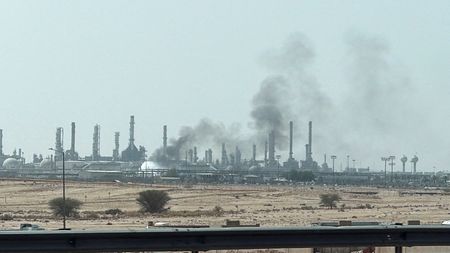
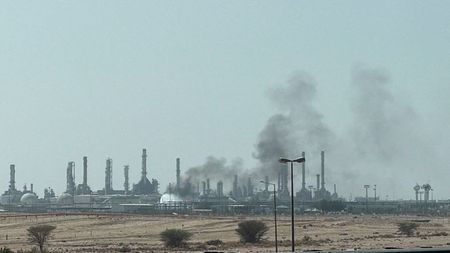
The Houthis said they launched ballistic missiles and drones at Saudi Aramco sites in Riyadh and the Khurais area of Saudi Arabia in response to 50 Saudi-led air and missile strikes in Yemen in the last 12 hours. There was no confirmation from Saudi Arabia.
Yemeni government forces attacked Houthi positions in the Dhubab district overlooking the strategic Bab el-Mandeb strait on Monday, two military sources said, a day after the internationally recognised government launched a campaign to retake Houthi-held territory.
OPEC+ delayed a review that would determine 2027 oil output quotas for its members after the Iran war disrupted projects to expand capacity across the Middle East, throwing estimates of future production potential into uncertainty, said two sources close to the matter.
Aramco, meanwhile, unexpectedly cut November crude oil prices for Asia to six-year lows.
Potentially adding to the lack of refined products, Ukraine will continue attacking Russian oil refineries, Ukrainian President Volodymyr Zelenskiy told Reuters in an interview published on Saturday.
(Reporting by Seher Daree in London, Florence Tan and Sethuraman NR ; Editing by Thomas Derpinghaus, Kim Coghill and Barbara Lewis)
Find it fast
Looking for more insights? Explore our other news sections for updates on sustainable finance, companies and financial education