French wine output among 30-year lows after heatwaves
By Sybille de La Hamaide
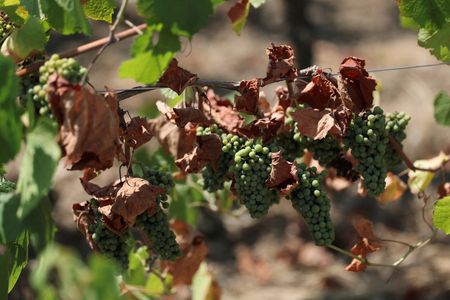
PARIS, Sept 7 (Reuters) - French wine production is likely to be one of the worst in the past 30 years, with Champagne region's output set to halve from 2025, after shrinking vineyards and severe heat and drought damaged vines and grapes, the farm ministry said on Monday.
In its first estimate for this year's production, the world's second-largest producer after Italy projected 33.9 million hectolitres: 6% below last year and 17% down on the 2021 to 2025 average.
A hectolitre is the equivalent of 100 litres or 133 standard wine bottles.
This would mark France's third consecutive weak wine harvest, after low output in 2024 and 2025.
Although spring conditions had initially supported a better harvest outlook, summer drought and heatwaves damaged vines and reduced yields, the ministry said.
Output in Champagne is expected to be 49% down on 2025, and 47% below the five-year average.
Bourgogne-Beaujolais is forecast to be down by a third and Val de Loire and Charentes by 12% and 6% respectively.
Languedoc-Roussillon, France's largest producing basin, should rise 5% from last year's weak harvest thanks to better yields, though output remains below average.
Bordeaux is also expected to rebound 10% from 2025 after late-August rain helped offset drought stress, but production remains well below its five-year average.
Most wine producers in France - like other European countries - started harvesting grapes unusually early this year as a result of extreme heat, the ministry said.
France is traditionally the world's largest exporter by value.
The production area fell 2.5% this year. Oversupply in the face of falling wine consumption has prompted winemakers to uproot a portion of their vineyards in past years.
Beyond the wine sector, most French agriculture producers have been badly hit by this summer's record heatwaves that devastated crops, pastures and water supplies.
France on Friday announced an emergency aid package for farmers of more than €1 billion ($1.16 billion).
(Reporting by Sybille de La Hamaide; Editing by Joe Bavier; Editing by Andrew Cawthorne)
Find it fast
Looking for more insights? Explore our other news sections for updates on sustainable finance, companies and financial education