Dollar rises, euro slips after ECB rate increase
By Chibuike Oguh
NEW YORK, Sept 10 (Reuters) - The dollar rose against major currencies on Thursday, recouping some of the week's losses that were sparked by higher oil prices and bond yields, while the euro slipped after the European Central Bank delivered a widely expected interest rate increase.
The ECB raised interest rates by 25 basis points, marking the second time this year the central bank has moved to quell an energy-driven rise in inflation triggered by the Iran war.
The euro dropped immediately after the decision and was last down 0.19% against the dollar at $1.1612, as markets worried about the economic impact of future hikes with ECB policymakers aiming to tame inflation.
U.S. producer prices appeared to drive the dollar's gains after data matched market forecasts and reinforced expectations of a Federal Reserve rate hike next week, said Eugene Epstein, head of structured products for North America at Moneycorp.
"ECB rate hike odds have all increased so I would argue it was hawkish but I really think the main driver of the stronger dollar, which is the case across all currency pairs, is the PPI. I think markets are quite jittery ahead of tomorrow's CPI, which is really the main event," he said.
The dollar strengthened 0.35% to 0.813 against the Swiss franc.
Markets are eyeing the U.S. CPI, which is due on Friday, and a strong reading would likely spur a dollar relief rally, said Bank of America analyst Alex Cohen in an investor note. "A hot print could support a relief rally, but sustained USD strength still likely requires Fed follow-through," he said.
OIL PRICES JUMP
The dollar also drew support from a surge in oil prices after Iran-aligned Houthis seized Yemen's port of Mocha, heightening concerns about disruptions to Red Sea shipping even as tanker traffic remains restricted through the Strait of Hormuz. Brent crude futures rose 6.3% to settle at $107.63 a barrel.
The dollar index rose 0.28% to 99.06, on track to snap three straight sessions of losses.
YEN STRENGTH EASES
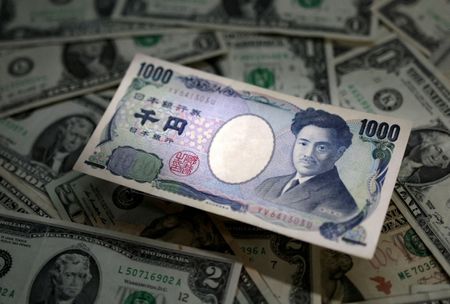
The yen was retreating after three straight sessions of gains as the dollar edged higher. The yen has gained more than 6% since a late-July intervention and, while down 0.50% on Thursday at 154.32 per dollar, remained not far from a seven-month high ahead of an expected BOJ rate hike next week.
The U.S. Treasury intervened alongside the Bank of Japan to support the yen in late July, selling euros rather than dollars. Earlier this week, Treasury Secretary Scott Bessent said he favored using Washington's financial power as a foreign policy tool, while the Treasury announced a larger bond buyback operation for Thursday to curb rising long-term yields.
The euro strengthened 0.34% against the yen to 179.20.
Elsewhere, the Canadian dollar weakened 0.20% to C$1.3833 per dollar while pound sterling weakened 0.27% to $1.351.
China's yuan held steady near a 3-1/2-year high at 6.715 per dollar.
(Reporting by Chibuike Oguh in New York; Editing by Deepa Babington, Chris Reese and Edmund Klamann)
Find it fast
Looking for more insights? Explore our other news sections for updates on sustainable finance, companies and financial education