Apple bets on new screen gadget, Siri AI in home device push
By Stephen Nellis and Anhata Rooprai
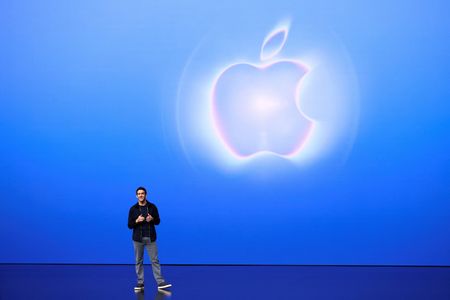
NEW YORK, Oct 13 (Reuters) - Apple on Tuesday launched a raft of smart products, including an iPad-like device dubbed the HomeView, in a bet that its AI-upgraded Siri virtual assistant can help it carve out a bigger share of the highly competitive connected home market.
The HomeView device, which starts at $299 and starts shipping next month, is Apple's latest entry into a highly competitive market for connected home devices. It will feature a 7-inch screen and face recognition and will help users control doorbells, thermostats and smart locks in a market where Apple has tinkered for a decade without major success.
Apple is launching these products as it tries to fend off competition from rivals, including traditional competitors like Amazon.com, which has invested heavily in its Echo speakers and Ring doorbells and last week launched premium tablets, as well as newer AI upstarts like OpenAI that have hardware ambitions of their own.
"Apple needs to demonstrate that its AI capabilities can deliver meaningful benefits beyond basic voice commands, simplifying everyday tasks and bringing greater intelligence to the home," said PP Foresight analyst Paolo Pescatore.
Investors are looking more closely at Apple's hardware sales for growth. The company's services revenue has come under regulatory pressure, although that could also eventually get a boost from the new suite of devices.
"The objective seems to be to drive high-margin 'Services' revenue via Apple TV, Apple Pay and iCloud," said Melissa Otto, head of Visible Alpha Research at S&P Global Market Intelligence, noting that Apple's 2027 services revenue is forecast to rise 12% to $138 billion. "Growth in Apple's lucrative subscription services may be the gateway to earnings growth increases over the next two years."
Apple this summer upgraded Siri's capabilities with assistance from Google but analysts said it is unclear whether its AI assistant is competitive enough to lure consumers to a crowded connected home device space.
The device features a 7-inch screen — which Apple said is to make it fit into a home without being too imposing — similar to Apple's "sunflower" iMac from the 2000s. And while it features a menu of square app icons like an iPhone or iPad that change depending on which user is recognized, Apple showed it being used more often via voice with its Siri AI assistant.
The launches also coincide with growing worries that connected devices, including refrigerators and smart TVs, could be vulnerable to hackers.
OTHER BELLS AND WHISTLES
Apple accompanied the HomeView launch with updates to its HomePod smart speaker and Apple TV devices. It also introduced a range of accessories, including doorbells, cameras and thermostats, made by LG and Schneider Electric and designed with help from Apple.
Apple's work with LG and Schneider Electric to sell a suite of products alongside the HomeView was meant to make it easier to add smart home products to a household. Kaiann Drance, Apple's vice president of product marketing for home products, said the devices can be added with a single tap, similar to Apple's first-party devices such as AirPods.
"For people who haven't experienced the Home ecosystem or haven't gone further than maybe a product here or there, I think this is a great opportunity to look," Drance told Reuters in an interview.
Ben Wood, chief analyst and chief marketing officer for CCS Insight, said that at first glance Apple's partnership with the two outside firms looked like a break with its usual practice of fully controlling its hardware.
"However, looking closely, it appears like there has been very deep collaboration between Apple and these partners to ensure the design, engineering and experience closely match what users would expect from Apple," he said.
During a video demonstrating the device, Apple showed the HomeView, which is meant to hang on walls or perch on tabletops, and its Siri virtual assistant juggling voice requests from multiple members of a family at the same time.
To pull in private data from messages and calendars, the HomeView relies on a user having an iPhone that's been recently unlocked and connected to the same home network.
The HomeView device will not be sold in the European Union, because Siri AI remains unavailable there due to EU regulations, Apple said.
Apple first released its Home app to control smart gadgets in 2016, with HomePod smart speakers following in 2018, but those offerings are competing with Alphabet's Google Home speakers and Amazon's Echo line. Analysts said two major hurdles for Apple were making its devices work with a variety of third-party gadgets and the limited ability of Siri to give useful answers.
“Apple has the brand, technology and loyal customers to make a serious impact, but it is playing catch-up with rivals that have a far stronger presence," Pescatore said.
Fragmentation among various companies' "smart" home products and the difficulty of connecting them has proved a hurdle to the market's growth although there is hope that AI-enabled devices from Apple, Google and Amazon could make integration more seamless.
"Most smart speakers and hubs in homes today are low-cost devices that can't run AI at the edge, so they are ripe for replacement," said Mohit Agrawal, Research Director at Counterpoint. "Amazon and Google have only just begun refreshing their hardware for Alexa+ and Gemini, so the upgrade cycle is wide open, and Apple wants to win it."
Apple's $299 price for HomeView is above Amazon's Echo Show 8 at $199.99 and Google's Nest Hub at $99.99, as it seeks a bigger role in connected homes.
The new Apple TV 4K enters the market at $299, more than double the price of its starting price of its predecessor and in line with Nvidia's Shield TV Pro, while rival offerings from Amazon, Google and Roku cost $200 or less.
Shares were up about 1% in Tuesday afternoon trading after earlier touching a record. Apple stock has gained 25% so far this year, outperforming the large-cap Nasdaq 100, which is up 21% for the same period.
(Reporting by Stephen Nellis in San Francisco; Additional reporting by Anhata Rooprai in Bengaluru; Editing by David Gaffen, Christian Plumb and Aurora Ellis)
Find it fast
Looking for more insights? Explore our other news sections for updates on sustainable finance, companies and financial education