Oil prices set for second weekly decline as Trump sticks with Iran blockade
By Anna Hirtenstein
LONDON, Nov 13 (Reuters) - Oil prices were mixed on Friday and headed for a second weekly decline as the US focus on its blockade of Iran and other economic pressure eased fears of renewed direct conflict, though shipping attacks remained a supply risk.
Brent futures rose 39 cents, or 0.4%, to $96.21 a barrel at 1200 GMT. US West Texas Intermediate (WTI) futures were down 12 cents, or 0.1%, to $88.62 a barrel.
For the week, Brent and WTI were both on track for a drop of around 2%. The benchmarks plunged 16% and 13%, respectively, last week.
"The market is range-bound post midterms," said Jeff Currie, founder of Real Macro and former global head of commodities research at Goldman Sachs, adding that there appeared to be little prospect either of more hostilities or of a peace deal.
"That means the market is roughly balanced, with the ability to trade up limited and the ability to trade down limited," he said.
Oil has had a volatile trading week, with earlier hopes for a rapprochement in the US-Israeli war on Iran, now in its ninth month, offset by strikes on Saudi Arabian infrastructure by Yemen’s Iran-backed Houthis and attacks on tankers shipping crude out of the Gulf.
US President Donald Trump said on Truth Social a deal with Iran was not necessary to end the war.
"Trump's indications that further military escalation against Iran may not be necessary have raised expectations that Washington could increasingly rely on economic sanctions and restrictions on oil shipments rather than intensifying military operations," said Sugandha Sachdeva, founder of SS WealthStreet, a New Delhi-based research firm.
The weakness in oil prices is also largely driven by signs of softening US demand, as rising crude oil and fuel inventories indicate a relatively subdued consumption outlook, Sachdeva said.
US crude and fuel inventories rose last week, driven by softer refined products demand and a jump in oil imports, the Energy Information Administration said on Thursday.
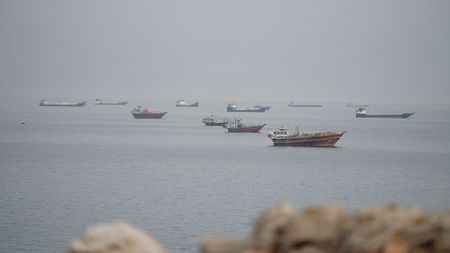
Despite the easing prices, risks remain for oil shipments out of the Strait of Hormuz, the key waterway for crude exports from the main Middle East producers.
On Thursday, Iran's military said four oil tankers were hit by explosions in the Strait of Hormuz after ignoring warnings. Reuters could not immediately verify the Iranian accounts.
That same day, Yemen's Iran-aligned Houthis said they had attacked a pumping station on the Saudi East-West oil pipeline, an oil facility in the Saudi Red Sea city of Yanbu, and an Aramco building in the capital Riyadh.
"Geopolitical risks remain elevated, and any fresh disruption to oil supplies could quickly reignite upward pressure on prices," Sachdeva of SS WealthStreet said.
(Reporting by Anna Hirtenstein in London. Additional reporting by Helen Clark and Sethuraman N R; Editing by Christian Schmollinger, Sonali Paul, Thomas Derpinghaus, Tomasz Janowski and Chizu Nomiyama )
Find it fast
Looking for more insights? Explore our other news sections for updates on sustainable finance, companies and financial education