-
Markets
athexgroup.grAthens Exchange GroupWeiterlesenTogether for a unified, stronger European capital market.
-
Aktien
Sustainable finance2025 Euronext ESG Trends ReportWeiterlesenA data-driven snapshot of how Euronext-listed companies are advancing their Environmental, Social and Governance (ESG) practices.
-
Indices
Access the white paperInvesting in the future of Europe with innovative indicesWeiterlesenThe first edition of the Euronext Index Outlook series with a particular focus on the European Strategic Autonomy Index.
-
ETFs
The European market place for ETFsEuronext ETF EuropeWeiterlesenInvestors benefit from a centralised market place that will not only bring transparency but also better pricing due to the grouping of liquidity.
- Funds
-
Fixed Income
European Defence BondsGroupe BPCE lists the first bondWeiterlesenFirst financial institution in Europe to issue a bond dedicated to the defence sector
- Structured Products
-
Derivatives
Where European Government Bonds Meet the FutureTrade Mini Bond FuturesWeiterlesenTrade mini bond futures on main European government bonds
-
Rohstoffe
- Übersicht
- MATIF Kurse überblick
- Power Derivatives
- Milling Wheat derivatives
- Corn derivatives
- Spread contracts
- Rapeseed derivatives
- Durum Wheat derivatives
- Dairy derivatives
- Salmon derivatives
- Container Freight Futures
- Delivery & settlement
- Specifications & arrangements
- Commitments of Traders (CoT) report
- Commodity brokers
Take control of unpredictable dairy pricesEuropean Dairy DerivativesWeiterlesenFutures and options on butter and skimmed milk powder now trading.
-
Resources
Designed to help students navigate the complexities of financial marketsEuronext Trading gameWeiterlesenJoin the Euronext Trading Game and step into capital markets. Learn from today’s leaders, explore sustainable opportunities, and trade with confidence.
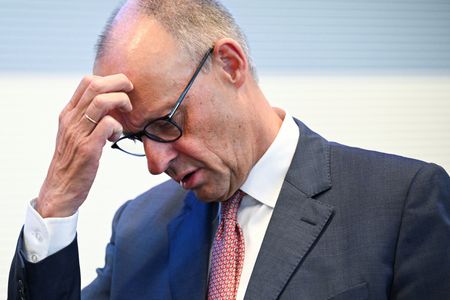
Germany's Merz vows electricity tax cut for all consumers to close 'credibility gap'

BERLIN, Oct 12 (Reuters) - German Chancellor Friedrich Merz vowed on Monday to lower an electricity tax for all consumers to the EU minimum, following a meeting of his conservatives on how to address voters' concerns after losing ground to the far right in recent state elections.
• The cut had initially been planned for last year but was abandoned due to a lack of budgetary leeway.
• "Our aim is not only to provide relief but also to close the credibility gap that arose for all of us as a result of that decision last year," said Merz.
• He said the budget leeway exists if recent optimistic economic growth projections hold, which could lead to roughly €5 billion ($5.6 billion) in additional federal tax revenue - precisely the amount needed to lower the tax.
• At a separate press conference on fiscal policies, Finance Minister Lars Klingbeil, however, was cautious about the move's longer-term viability. "We are pleased about the return of economic growth but I can't confirm the assumption that this could permanently fund the electricity tax cut," said Klingbeil.
• The electricity tax was introduced in 1999 as part of Germany's ecological tax reforms. It is charged at 2.05 euro cents per kilowatt-hour and is passed on to consumers through their electricity bills.
• It has already been reduced to the European minimum level of 0.05 cent per kilowatt-hour for some business sectors. Merz now wants to extend that lower rate to all consumers.
($1 = 0.8945 euros)
(Reporting by Andreas Rinke, Writing by Miranda MurrayEditing by Ludwig Burger and Susan Fenton)
Find it fast
Looking for more insights? Explore our other news sections for updates on sustainable finance, companies and financial education