Bank of England's Ramsden happy with market reaction to multi-year bond sale plans
By David Milliken
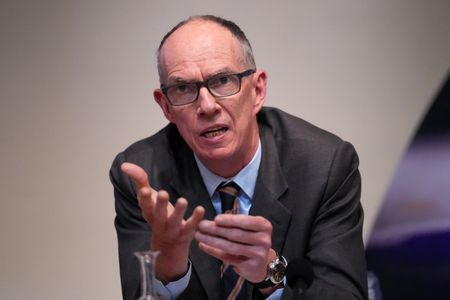
LONDON, Sept 28 (Reuters) - Bank of England Deputy Governor Dave Ramsden said on Monday that markets appeared to have reacted well to the BoE's decision to set out a long-term path for selling down its bond portfolio, slightly lowering borrowing costs.
Earlier this month, the BoE set out a plan to offload most of its £488 billion ($647 billion) of gilt holdings by 2034, selling gilts at a pace of £20 billion a year, allowing shorter-dated debt to mature while keeping £120 billion of long-dated gilts to back banknote issuance.
"There was a lot of information in the set of announcements released just over a week ago and ... these seem to have been well understood and well received," Ramsden said in a speech to London's Money Macro and Finance Society, his first comments on the market reaction to the quantitative tightening plan.
Gilt prices rallied sharply after the BoE announcement, especially for longer-dated gilts, pushing down yields.
"This suggests the market was expecting more QT, either in total or at a higher pace," Ramsden said. "It is also possible that the removal of uncertainty about the path of future QT reduced risk premia."
Ramsden also repeated his view in minutes of September's policy decision that the BoE may need to raise interest rates if inflation pressures build.
Ramsden was part of the 6-3 majority on the BoE's Monetary Policy Committee who voted to keep interest rates on hold this month.
Unlike the European Central Bank or the US Federal Reserve, the BoE has not increased interest rates since the start of the Iran war, partly because its policy stance was already restrictive.
"Whilst the policy stance continues to provide restrictiveness, were upside pressures on the inflation outlook to continue to build, there could be a case for increasing Bank Rate," Ramsden said.
Energy prices, extreme weather events and cost pressures from the artificial intelligence supply chain would be among factors Ramsden said he would assess, alongside domestic food prices and wage negotiations.
($1 = 0.7548 pounds)
(Reporting by David Milliken; editing by Suban Abdulla)
Find it fast
Looking for more insights? Explore our other news sections for updates on sustainable finance, companies and financial education