Exclusive-BNP Paribas, KB Kookmin in talks for $2 billion Vietnam Techcombank stake, sources say
By Yantoultra Ngui and Phuong Nguyen
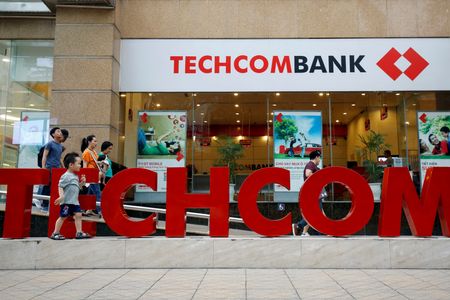
HONG KONG/HANOI, Aug 26 (Reuters) - France's BNP Paribas and South Korea's KB Kookmin Bank are in separate talks to acquire at least a 15% stake in Vietnam's Techcombank as strategic investors, two sources said, athough BNP subsequently said it has no plans to acquire an equity stake in the lender.
The potential deal, which has not been reported previously, would give the winner rare access to Vietnam's fast-growing banking market and end Techcombank's long search for a foreign strategic partner.
Techcombank is seeking a valuation of about two times its book value, said the sources, who are familiar with the deal discussions but spoke on condition of anonymity as they were not authorised to speak to the media.
If agreed, that would value a 15% stake in Vietnam's third-largest privately owned bank by total assets at around $2 billion, and would represent about a 55% premium over its last closing price.
Techcombank shares rose as much as 7% in afternoon trading on Wednesday after the Reuters report.
KB Kookmin Bank said it would not comment on market rumours or speculation, as part of South Korea's capital markets and disclosure rules.
BNP Paribas, which declined to comment on the deal on Wednesday, said in a statement on Thursday that it has no plans to acquire an equity stake in Techcombank.
Spokesperson for Techcombank declined to comment.
The latest deal talks come as foreign banks are seeking a bigger foothold in Vietnam by extending hard-currency loans to local lenders squeezed between rising domestic funding costs and government pressure to expand credit.
Several foreign banks operate in Vietnam through branches, and more could enter under the government's plan to establish international financial centres, analysts said, though key details remain unclear.
Japanese and South Korean banks are already strategic investors in some of the country's largest lenders. Japan's Sumitomo Mitsui Banking Corp bought a 15% stake in VPBank in 2023.
FAST-GROWING BANKING SECTOR
Vietnam caps foreign ownership at 30% for most banks. In Techcombank, foreign ownership currently stands at around 20.5%, and the sources said interested bidders are weighing several options including purchases from existing foreign investors.
No formal agreement has been reached and there is no certainty that the talks would result in a deal, they said, adding Techcombank was likely to select only one of the two bidders.
Valuation remains the main hurdle as Techcombank is seeking a sharply higher premium to its current market value, one of the sources said, adding that a strategic buyer would be buying future growth and access to a scarce banking platform.
A deal could be reached by the end of 2026 or the first half of 2027, depending on negotiations, the sources said.
Techcombank has long said it is open to a foreign strategic investor. It is one of Vietnam's few large privately owned banks without such a strategic partner.
For BNP Paribas or KB Kookmin, a Techcombank stake would offer exposure to Vietnam's expanding middle class, rising wealth management demand and fast-growing private banking sector.
BNP Paribas and KB Kookmin Bank already operate branches in Hanoi and Ho Chi Minh City, while KB Financial Group, Kookmin's parent, has a majority-owned securities unit in Vietnam.
Founded in 1993, Techcombank had more than 18 million clients at the end of 2025 and covered well over half of Vietnam's high-net-worth and affluent customers, according to its 2025 annual report.
Techcombank's total assets were 1,273 trillion dong ($48.76 billion) at the end of June 2026, with customer deposits amounting to 697.4 trillion dong, according to its financial statements.
First-half pretax profit rose 22.5% from a year earlier to 18.5 trillion dong, driven by growth in net interest income and fee income, according to the bank.
($1 = 26,107.0000 dong)
(Reporting by Yantoultra Ngui in Hong Kong and Phuong Nguyen in Hanoi; Additional reporting by Francesco Guarascio in Hanoi, Tom Westbrook in Singapore and Joyce Lee in Seoul; Editing by Sumeet Chatterjee, Muralikumar Anantharaman and Louise Heavens)
Find it fast
Looking for more insights? Explore our other news sections for updates on sustainable finance, companies and financial education