Brent climbs $1 on uncertainty over end to Iran war
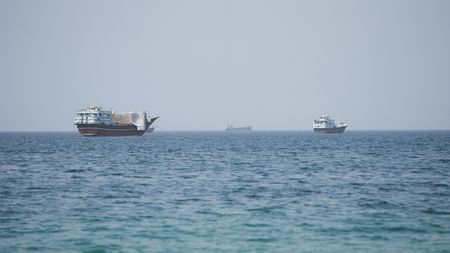
HOUSTON, Aug 7 (Reuters) - Brent crude oil climbed more than $1 a barrel on Friday over ongoing uncertainty about the negotiations in progress that determine control of, and reopen, the key shipping artery of the Strait of Hormuz.
Brent crude futures settled at $83.55 a barrel, gaining $1.06, or 1.3%. West Texas Intermediate futures finished at $78.18 a barrel, up 89 cents, or 1.15%.
Oil futures settled more than $3 a barrel higher on Thursday as Iran reviewed a bill to ban U.S. and Israeli vessels from the Strait of Hormuz, through which roughly a fifth of the world’s oil and liquefied natural gas normally passed before the war began at the end of February.
Oil prices fell earlier in the week as a possible solution to the conflict looked more likely, part of an on-again, off-again pattern that has persisted since the U.S. and Israel jointly struck the nation in late February, igniting a conflict that has now stretched into a sixth month. Brent was on course for a weekly loss of more than 8%, while WTI lost more than 7%.
While this week's signals on a potential deal have sent a roller-coaster ride in market sentiment, the market remains in the dark as to what needs to happen for the agreement to be clinched, said Vandana Hari, founder of oil market analysis provider Vanda Insights.
"The market is trying to assess if an Iran-Oman agreement would allow a U.S.-flagged vessel to transit the Strait of Hormuz," said Andrew Lipow, president of Lipow Oil Associates. "Would it allow a U.S.-owned vessel to go through? Would it allow a vessel headed for a U.S. port to go through?"
Both Iran and Oman are said to have agreed on the route ships would take through the strait, which lies between their two countries. It is unclear if the U.S. will agree to these terms.
Analysts also said that this week's developments have signalled that hostilities between Iran and the U.S. are not yet over.
Iran is seeking fees of between 5% and 7% of the price of cargoes from ships using the strait, a senior Iranian official said. Oman, meanwhile, is discussing fees of about 3% while Washington wants no fees at all.
"The longer the supply disruption goes, the longer the world's commercial reserves are being drawn down," he said.
Four industry sources have said the proposed deal is not easily workable because of U.S. sanctions and restrictive insurance clauses on any payments.
"The structure of the Iran-Oman agreement in its current form and the power it yields to Iran is nothing that (U.S. President Donald) Trump can accept politically," said Bjarne Schieldrop at SEB Research. "Trump would face heavy political criticism at home if he did."
"We need that strait to be reopened fully," said John Kilduff, partner with Again Capital.
The continued uncertainty about the outcome of the war and the timing of its end keeps traders very anxious, Kilduff said.
(Reporting by Erwin Seba in Houston, Stephanie Kelly in London, Mohi Narayan in New Delhi and Helen Clark in Perth; Editing by Susan Fenton, Elaine Hardcastle and Daniel Wallis)
Find it fast
Looking for more insights? Explore our other news sections for updates on sustainable finance, companies and financial education