German regulator moves to curb Deutsche Bahn dominance on key rail routes
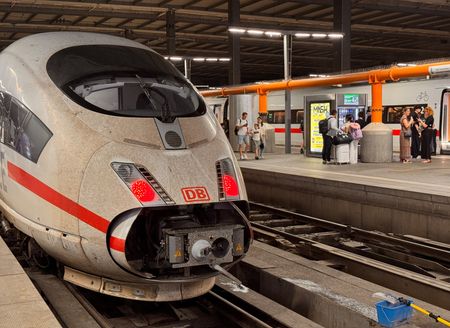
BERLIN, June 30 (Reuters) - Germany's network regulator plans to limit Deutsche Bahn's use of long-distance rail capacity on some congested routes, potentially opening the market to rivals including Italy's Italo.
The Bundesnetzagentur presented the proposal to its rail infrastructure advisory council on Tuesday. The council must be consulted before the draft can become binding.
The move follows a complaint by Italian high-speed rail operator Italo, which wants to enter the German market from 2028 but says it needs predictable access to the already overloaded network.
Deutsche Bahn controls about 95% of Germany's long-distance rail market and is battling chronic delays while carrying out a roughly €150 billion ($171 billion), decade-long upgrade of the network.
'MINIMUM LEVEL OF ACCESS'
The proposed cap would apply to routes where long-distance rail capacity is formally constrained and would be enforced through Deutsche Bahn's infrastructure unit, DB InfraGO, which operates tracks and stations under Bundesnetzagentur oversight.
Under the proposal, DB InfraGO could allocate no more than 60-75% of such capacity to a single operator, the regulator said.
The measure would guarantee "a minimum level of access for competitors in clock-face long-distance services," Bundesnetzagentur President Klaus Mueller said.
DB InfraGO said the proposal would worsen existing bottlenecks and capacity constraints, with competition concentrated on major routes while key rail hubs continue to lack capacity for wider regional connections.
It said it would review the draft decision and consider its options.
Italo welcomed the proposal as "a clear signal" that Germany was ready for genuine competition in high-speed rail.
According to the Bundesnetzagentur, Italo plans to invest €3.6 billion, order about 30 Siemens high-speed trains and operate services on the Munich-Berlin and Munich-Dortmund routes.
($1 = 0.8765 euros)
(Reporting by Klaus Lauer. Writing by Kirsti Knolle. Editing by Mark Potter)
Find it fast
Looking for more insights? Explore our other news sections for updates on sustainable finance, companies and financial education