Analysis-Germany plans to ease pension burden, but young still face an uphill climb
By Maria Martinez
BERLIN, June 26 (Reuters) - Germany's proposed pension reforms will ease pressure on younger workers struggling to accumulate wealth in the face of a weak economy and high housing costs, but analysts say the path to financial stability remains steeper than that of their parents.
The proposed changes come as Europe's biggest economy braces for the retirement of its large baby-boomer generation, defined in Germany as those born between 1955 and 1969.
The need for reform has gained urgency given the scale of the demographic shift ahead. Around 13.3 million economically active people will have surpassed the statutory retirement age of 67 by 2040, equivalent to 30% of last year's economically active population, the German statistics office said on Tuesday.
While ageing populations and affordable housing issues are common across Europe, Germany stands out for its heavy reliance on a pay-as-you-go public pension system, an unusually low homeownership rate and an export-led industrial model that long underpinned stable jobs but is now under pressure.
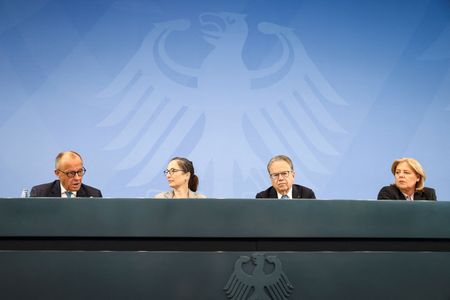
A government commission has proposed establishing a Swedish-style pension fund, with mandatory contributions from workers and employers invested in financial assets to help fund future pensions to ease the strain on the system as the proportion of workers to retirees shrinks.
It also proposed incremental increases in the retirement age tied to life expectancy — expected to rise to around 70 by the 2090s — while scrapping the option of retiring at 63 without deductions.
The changes would ease the funding pressure on younger workers over time, Ifo's managing director Joachim Ragnitz said. "But during the transition period, before the full effect is reached, younger people will continue to bear a burden," he said.
He cautioned that the funded component would only cover part of future pensions.
"The pay-as-you-go system will therefore continue and will always place a burden on younger people if the birth rate remains below the replacement level of two children per woman," Ragnitz said.
A GENERATION GETTING SQUEEZED
The proposed pension overhaul coincides with an unprecedented fiscal splurge by the government aimed at reviving growth, though economists have warned that many other promised reforms needed for sustainable growth are still not in place.
Public sentiment surveys reflect growing anxiety about the outlook for younger generations.
In Pew Research Center surveys, the share of Germans who said their children would be financially worse off than their parents rose to 61% in 2024 from around half those surveyed in 2018, when Germany's industrial slowdown began.
"The (pension) reforms will only very gradually shift the balance towards the younger generation," said Carsten Brzeski, global head of macro at ING, referring to those aged 45 and under.
Baby boomers entered adulthood during decades of steady industrial work, rising asset prices, affordable housing and a pension system supported by a larger working-age population.
Many began their careers in the mid-1970s, when unemployment was low and Germany's export-led economy was expanding.
"The young generation is now having to shoulder the burden of having to finance pensions of a large generation of seniors, while being unsure what they will eventually get out of the system themselves," said Sebastian Koenigs, senior economist specialised in inequalities at the OECD.
Millennials — born between 1981 and 1996 — entered the labour market around the turn of the century, encountering high unemployment that peaked at 15.5% in 2005, followed by the global financial crisis, the pandemic and the energy shock triggered by Russia's invasion of Ukraine.
Germany's industrial model has since weakened, with cheap Russian energy gone, productivity sluggish and manufacturers cutting jobs.
The change is visible in incomes. In the mid-1990s, Germans aged 25 to 34 had slightly higher disposable household income than those aged 55 to 64, according to OECD data adjusted for differences in household sizes and composition.
Today, that pattern has reversed: people aged 55 to 64 have disposable incomes about 12% higher than those aged 25 to 34, data from the OECD's 2025 Employment Outlook shows.
Home ownership — a key driver of wealth accumulation — compounds the disparity. Germany's home ownership rate, at about 47%, is the lowest in Europe, Eurostat data shows. Renters, who make up the majority of households, account for just 11% of national wealth, according to an OECD report on household wealth.
Among those in their 30s, home ownership has fallen to 32% from 41% over the past three decades, OECD data showed.
"Wages have been developing very sluggishly, the cost of living has been rising, and because house prices are so high, it's extremely hard to get into the housing market," Koenigs said.
To be sure, millennials who inherit property or receive parental support can advance, while those relying only on wages face high rents and limited scope to build assets. But analysts say that means inequality may increasingly run not only between old and young, but between young heirs and non-heirs.
(Reporting by Maria Martinez; Editing by Emelia Sithole-Matarise)
Find it fast
Looking for more insights? Explore our other news sections for updates on sustainable finance, companies and financial education