-
Markets
athexgroup.grAthens Exchange GroupWeiterlesenTogether for a unified, stronger European capital market.
-
Aktien
Sustainable finance2025 Euronext ESG Trends ReportWeiterlesenA data-driven snapshot of how Euronext-listed companies are advancing their Environmental, Social and Governance (ESG) practices.
-
Indices
Access the white paperInvesting in the future of Europe with innovative indicesWeiterlesenThe first edition of the Euronext Index Outlook series with a particular focus on the European Strategic Autonomy Index.
-
ETFs
The European market place for ETFsEuronext ETF EuropeWeiterlesenInvestors benefit from a centralised market place that will not only bring transparency but also better pricing due to the grouping of liquidity.
- Funds
-
Fixed Income
European Defence BondsGroupe BPCE lists the first bondWeiterlesenFirst financial institution in Europe to issue a bond dedicated to the defence sector
- Structured Products
-
Derivatives
Where European Government Bonds Meet the FutureFixed Income derivativesWeiterlesenTrade mini bond futures on main European government bonds
-
Rohstoffe
- Übersicht
- MATIF Kurse überblick
- Power Derivatives
- Milling Wheat derivatives
- Corn derivatives
- Spread contracts
- Rapeseed derivatives
- Durum Wheat derivatives
- Salmon derivatives
- Container Freight Futures
- Delivery & settlement
- Specifications & arrangements
- Commitments of Traders (CoT) report
- Commodity brokers
Building a sustainable and liquid power derivatives market.Euronext Nord Pool Power FuturesWeiterlesenEuronext and Nord Pool, the European power exchange, announced the launch of a dedicated Nordic and Baltic power futures market.
-
Resources
Designed to help students navigate the complexities of financial marketsEuronext Trading gameWeiterlesenJoin the Euronext Trading Game and step into capital markets. Learn from today’s leaders, explore sustainable opportunities, and trade with confidence.
ECB wage tracker shows muted pay pressure despite war inflation
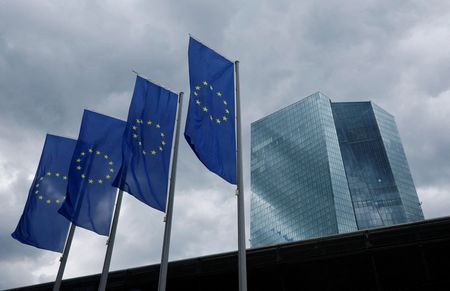
FRANKFURT, June 17 (Reuters) - Euro zone negotiated wage growth appears to be slowing as predicted, European Central Bank data showed on Wednesday, offering policymakers relief that the Iran-war-induced inflation surge has not set off a fresh round of pay demands.
The ECB fears workers will demand compensation for rapid inflation, much like in 2022, triggering a self-reinforcing cycle that can only be tamed through higher borrowing costs.
However, the ECB's own wage tracker, which includes data up to the end of May, was unrevised and indicates negotiated wage growth at around 2.6% by end-2026, below the 3.2% last year.
The data series with unsmoothed one-off payments shows wage growth for the whole of 2026 at 2.6%, down from 3% a year earlier, said the ECB, which has long argued that wage growth between 2% and 3% is consistent with its 2% inflation target.
Though just one piece in the inflation puzzle, the data may take pressure off policymakers to quickly raise rates again.
The ECB lifted its benchmark rate to 2.25% last week after inflation exceeded 3%, mostly to prevent expectations from rising, and policymakers are now debating whether a follow-up move in July is needed.
Markets expect between one and two more rate hikes over the coming year and the next move is fully priced in by October.
(Reporting by Balazs Koranyi; Editing by Alex Richardson and Alexander Smith)
Find it fast
Looking for more insights? Explore our other news sections for updates on sustainable finance, companies and financial education