French output shrinks and inflation accelerates, leaving economy at standstill, minister says
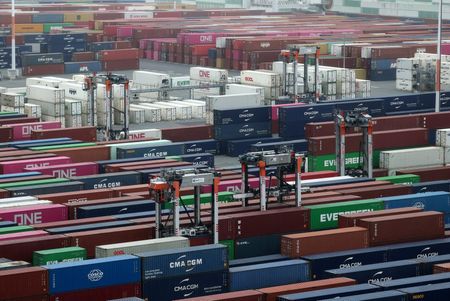
Oct 30 (Reuters) - The French economy unexpectedly shrank in the third quarter, while October inflation accelerated to the highest level since late 2023, due to what Economy Minister Roland Lescure described as an unprecedented mix of external and internal shocks.
France's preliminary GDP fell 0.1% in the third quarter, while analysts polled by Reuters were expecting a 0.1% rise. Harmonized year-on-year inflation, adjusted for comparison with other euro zone countries, was 3.8% in October, exceeding analysts' forecast of 3.6%.
French government borrowing costs jumped again after the preliminary GDP data was published, with 10-year bond yields rising 6 basis points to 4.944%, underperforming the rest of the euro zone.
"The conclusion to all this is that, by 2026, the French economy is at a standstill due to an unprecedented combination of external and internal shocks," Lescure said in an interview with public broadcaster franceinfo.
Statistics office INSEE said that high energy prices and increases in accommodation and transport services drove up inflation.
The European Central Bank left interest rates unchanged on Thursday, as expected, but hinted at another hike in December with a warning that high and rising energy costs stemming from the Iran war were fuelling inflation risks.
The French economy was affected by a 1.7% fall in exports, mainly linked to a 9.1% decline in exports of transport equipment, with aerospace as the main negative driver, versus 20.8% growth in the second quarter.
Investments fell 0.6% in the third quarter, extending a 0.5% decline in the second, as construction and transport equipment investments dragged on business spending.
France has been hit by a wave of protests in the final weeks of the quarter, which began with small student demonstrations in suburban Paris in September to denounce school conditions and swiftly broadened into a wider protest against the government's economic policies.
Quarterly household consumption continued to rise, with a 0.4% increase following 0.2% growth in the previous three months.
"Consumption of transport equipment is on the rise again, driven in particular by purchases of electric vehicles," INSEE said.
Consumer spending fell more than expected in September due to lower consumption of manufactured goods and food, while energy usage increased slightly.
(Reporting by Mathias de Rozario, Lucie Barbier and Gianluca Lo Nostro in Gdansk, editing by Milla Nissi-Prussak)
Find it fast
Looking for more insights? Explore our other news sections for updates on sustainable finance, companies and financial education