Europe weighs giving utilities, infrastructure companies more powers to bring down drones
By Maria Rugamer, Leo Marchandon, Marek Strzelecki and Florence Loeve
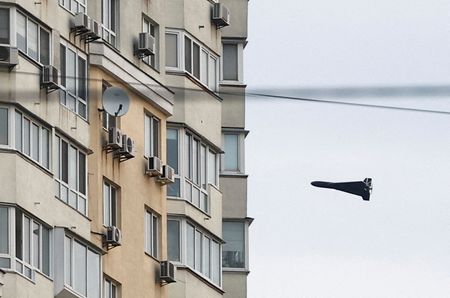
Oct 21 (Reuters) - At a former flight-test base south of Paris, drones swoop over fields and woodland as teams on the ground test systems designed to stop them — a response to a growing wave of drone incursions and "hybrid attacks" since Russia invaded Ukraine in 2022.
The potential clients for technology such as electronic jammers and interceptor drones tested at the Brétigny-sur-Orge site are no longer just governments, police and armies.
Private firms and state entities across Europe that operate critical infrastructure want to strengthen their defences, with some utilities asking for authorisation to shoot drones down themselves. From Paris to Berlin, governments are taking note.
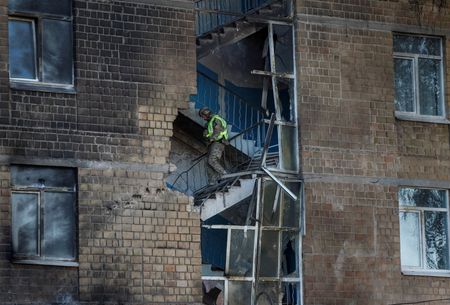
They are worried that hybrid warfare or a drone attack could knock out power to millions of people — as has happened frequently in Ukraine after Russian strikes.
"It is a theoretical, and increasingly a practical, possibility that there could be heating outages this winter due to hybrid attacks," Kristian Ruby, secretary general of European energy body Eurelectric, told Reuters.
Some European governments are responding by starting to give firms powers traditionally confined to the military. Interviews by Reuters with over 30 company executives, officials and drone experts meanwhile show the technology to detect and bring down drones is maturing faster than the rules on who may use it.
Approaches vary widely across Europe and legal uncertainties remain, including over who has the right to order a response to a drone threat. Bringing down a drone could cause injury or death to people on the ground or damage property, raising questions for companies about liability and accountability.
'DEFENCELESS'
France is among countries that have led the way. Its parliament passed a law in August allowing approved operators of critical infrastructure and contractors to detect, jam and shoot down drones near designated facilities.
The law passed by the French parliament in August responded to a wave of drone incursions over critical and military sites, including flights over the Ile Longue nuclear submarine base near Brest in northwestern France in December 2025.
France wants a newly expanded list of sensitive sites deemed of vital importance equipped by 2027, a senior French official involved in the plans told Reuters, asking not to be named because details of the plan are not yet public.
"We were defenceless in the face of the (drone) threat," the official said, adding that concerns had been growing over the last decade as unmanned aerial vehicles became more accessible and more common.
The French government wants to give operators of critical infrastructure such as state-owned utility company EDF and state-owned railway company SNCF a catalogue of approved systems ranging from electronic jammers to interceptor drones, depending on different environments and situations.
Confirming important elements of the plan outlined by the French official, Systematic Paris-Region, which runs the government testing programme at Brétigny-sur-Orge, said evaluations launched this summer had so far catalogued three systems integrators — which combine different computer systems into a unified whole — and 17 counter-drone systems.
It said assessments were continuing and work was under way to accelerate procurement from among those solutions.
France's defence ministry said the law passed in August would help strengthen capabilities to counter the threat, though it said it could speak only for the critical infrastructure under its authority. EDF and SNCF declined comment.
WHO CAN BRING DOWN A DRONE?
The discovery of an explosives-laden drone near a Ukrainian cargo plane at Germany's Leipzig/Halle airport in August underlined how far the risks have spread.
Germany blamed Russia for the incident. Moscow denied it was behind it, and has repeatedly denied carrying out hybrid attacks in Europe, many of which have been in countries that support Kyiv in Russia's war in Ukraine.
But concerns are growing that national authorities cannot respond fast enough to protect widely dispersed infrastructure against such attacks, and that the damage caused by relatively cheap drones could bring hefty repair costs.
In Germany, where counter-drone operations remain a policing function, the interior ministry told Reuters it was reviewing how critical infrastructure operators and third parties could be legally involved in active counter-drone measures.
In September, Austria announced plans to give similar powers to critical infrastructure operators, including large energy firms. Defence Minister Klaudia Tanner told a press conference that the state could not protect every site on its own.
Poland has gone further. Operators told Reuters they have deployed counter-drone systems and trained with military and police units. Drone-restricted zones have been established around critical energy infrastructure, and designated security units working for operators have been authorised to destroy, disable or take control of drones entering them.
But two sources at energy transmission companies on NATO's eastern flank told Reuters that effective intervention still requires more assurances, and perhaps a judicial precedent, on who bears responsibility for collateral damage.
Without that certainty, they said, operators of critical infrastructure could remain reluctant to neutralise drones because bringing one down could itself cause injury or costly damage.
BUILT FOR RECOVERY
Having powers to bring down drones would be a change of approach for companies across Europe.
Executives, officials and energy analysts told Reuters that utilities have spent years hardening networks and preparing to restore disrupted services, rather than preventing attacks.
Leonhard Birnbaum, chief executive of German energy firm E.ON, said in September that operators must assume some attacks will succeed, rather than plan on stopping all of them. The company operates about 2,720 substations across Germany, he said.
Lithuania is building a fortified substation near its border with Russia as part of plans by the Baltic states and Poland to improve their defences that include constructing bunkers, installing anti-drone nets and building up stocks of hard-to-replace equipment for critical parts of the energy grid.
Poland's state-owned transmission operator PSE patrols parts of its about 16,500-km (10,250-mile) high-voltage network by helicopter and is preparing more powerful aircraft to help protect an undersea power link to Sweden.
Yet relatively inexpensive drones are challenging such defences. Essential equipment such as large transformers can take years to replace, while even a successful repair can leave infrastructure out of service for months.
Not all utility operators are seeking a bigger role in defending themselves.
Asta Sihvonen-Punkka, chief executive of Finland's national power grid operator Fingrid, told Reuters that responsibility for countering threats around critical infrastructure should remain with Finnish authorities and armed forces.
Any move to give such powers to utility operators would be "a very, very big change" requiring careful legal consideration, she said.
Jari Stenius, head of security of Finnish utility Fortum, said he was content for energy companies to focus on producing energy while police and military authorities handled security threats.
TECHNOLOGY READY, RULES ARE NOT
Security officials and counter-drone technology firms say systems are becoming increasingly automated because operators cannot station specialist teams at every site.
Modern counter-drone systems combine sensors, command-and-control software and countermeasures into a single chain designed to identify, classify and respond to threats within seconds.
Several companies told Reuters that uncertainty over who can authorise a response has slowed investment in the latter stages of that process. France is therefore trying to automate the process as much as possible, said the senior French official involved in France's plans.
The official said security workers at utilities should eventually be able to detect a threat and launch an automated response at the press of a button, because having operators trained to use military-grade solutions at every location was unrealistic.
German defence company Rheinmetall told Reuters the biggest hurdle for civilian operators was often the delay between detecting a drone and deciding whether to deploy a countermeasure, as legal responsibilities remain fragmented.
Rheinmetall said interest from private infrastructure operators in counter-drone systems was rising sharply.
The company said it was conducting workshops, site surveys and infrastructure assessments for operators and was preparing for what it described as a "very fast-growing" market segment.
(Reporting by Maria Rugamer and Leo Marchandon in Gdansk, Florence Loeve in Paris and Marek Strzelecki in Warsaw; Additional reporting by Susanna Twidale, Nora Buli and Christoph Steitz. Editing by Matt Scuffham, Adam Jourdan and Timothy Heritage)
Find it fast
Looking for more insights? Explore our other news sections for updates on sustainable finance, companies and financial education