-
Marchés
athexgroup.grAthens Exchange GroupLire la suiteTogether for a unified, stronger European capital market.
-
Actions
Sustainable finance2025 Euronext ESG Trends ReportLire la suiteA data-driven snapshot of how Euronext-listed companies are advancing their Environmental, Social and Governance (ESG) practices.
-
Indices
Access the white paperInvesting in the future of Europe with innovative indicesLire la suiteThe first edition of the Euronext Index Outlook series with a particular focus on the European Strategic Autonomy Index.
-
ETF
The European market place for ETFsEuronext ETF EuropeLire la suiteInvestors benefit from a centralised market place that will not only bring transparency but also better pricing due to the grouping of liquidity.
- Fonds
-
Obligations
European Defence BondsGroupe BPCE lists the first bondLire la suiteFirst financial institution in Europe to issue a bond dedicated to the defence sector
- Produits Structurés
-
Dérivés
Where European Government Bonds Meet the FutureTrade Mini Bond FuturesLire la suiteTrade mini bond futures on main European government bonds
-
Matières Premières
- Vue d'ensemble
- Cours MATIF
- Power Derivatives
- Milling Wheat derivatives
- Corn derivatives
- Spread contracts
- Rapeseed derivatives
- Durum Wheat derivatives
- Dairy derivatives
- Salmon derivatives
- Container Freight Futures
- Règlement livraison
- Spécifications et dispositions
- Commitments of Traders (CoT) report
- Commodity brokers
Building a sustainable and liquid power derivatives market.Euronext Nord Pool Power FuturesLire la suiteEuronext and Nord Pool, the European power exchange, announced the launch of a dedicated Nordic and Baltic power futures market.
-
Ressources
Designed to help students navigate the complexities of financial marketsEuronext Trading gameLire la suiteJoin the Euronext Trading Game and step into capital markets. Learn from today’s leaders, explore sustainable opportunities, and trade with confidence.
Bank of England's Breeden says cost-cutting by firms helping central bank
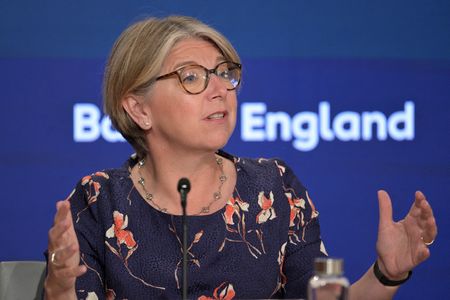
Oct 15 (Reuters) - Bank of England Deputy Governor Sarah Breeden said on Thursday that cost-cutting by UK companies in response to the energy price shock caused by the Iran war would make it easier for the central bank to contain inflation.
"What's really different now, relative to when we had the last energy shock in 2022, is that people aren't looking to push costs through," Breeden said in an interview with CNBC television.
"There's a desire to absorb the shock rather than just pass it on, which makes our job as monetary policymakers a bit easier in these uncertain times."
The comments about cost-cutting by companies echoed those made by BoE Governor Andrew Bailey earlier this week.
Breeden has voted with the majority of the Monetary Policy Committee to keep borrowing costs on hold since the start of the Iran war but said in September that she might change her stance if the energy price shock feeds through into broader inflation.
Investors are pricing a quarter-point rate hike by the BoE next month as a near certainty.
Breeden, in Bangkok for the semi-annual International Monetary Fund meetings, also told CNBC she hoped wages would not rise sharply as they did in 2022 after Russia's full-scale invasion of Ukraine due to weakness in the labour market now.
Earlier on Thursday, BoE Chief Economist Huw Pill said a rate hike by the central bank should not be interpreted by investors as the start of a long series of increases.
(Writing by William Schomberg; editing by Suban Abdulla)
Find it fast
Looking for more insights? Explore our other news sections for updates on sustainable finance, companies and financial education