AI limiting European workers' bargaining power, ECB's Lane says
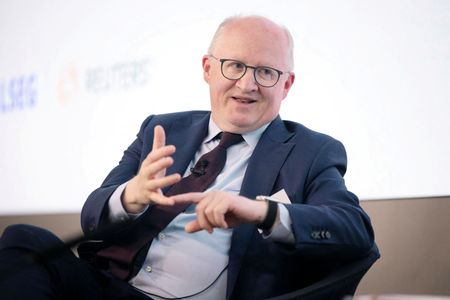
FRANKFURT, Oct 13 (Reuters) - The increased use of AI by euro zone companies could curb workers' ability to demand higher wages while heavy investment into the new technology may be materially tightening financing conditions, ECB chief economist Philip Lane said on Tuesday.
With inflation now running at nearly twice the ECB's 2% target on expensive energy, policymakers are searching for signs of second-round price effects, but have so far concluded there are none, especially in wage growth.
While AI has not changed employment trends, hiring plans are muted and this limits workers' ability to demand compensation for high inflation, Lane said, offering a potential explanation for why wage growth is slowing, despite high inflation.
"The potential for AI to replace some types of workers may also weaken the bargaining power of workers, moderating wage growth and reducing the labour share in total income," Lane said in a speech in Dublin.
While Lane did not directly discuss current monetary policy, he said that companies around the globe are borrowing so heavily to fund AI that this is pushing up borrowing costs for everyone and tightening financing conditions by a rate that is now relevant for ECB policy.
"The spillover to the euro area bond market means that the increase in long-term interest rates constitutes a material tightening of financial conditions for the euro area," Lane said. "This is a relevant factor for the ECB in determining the appropriate monetary policy stance."
The comments are significant since the ECB has been raising interest rates to prevent inflation from getting embedded and tighter overall financing conditions could mean the ECB may need to do less to tame price growth, some economists say.
AI could also have a relevant impact for the economy over the longer term, raising potential output and trend growth, which would increase the economy's potential 'speed limit,' Lane said.
"For Europe, the potential for AI to offset the economic impact of the projected trend decline in the working-age population is especially valuable," he said.
(Reporting by Balazs Koranyi; Editing by Emelia Sithole-Matarise)
Find it fast
Looking for more insights? Explore our other news sections for updates on sustainable finance, companies and financial education