Chinese refiners suspend October fuel exports to bolster stocks, sources say
By Trixie Yap, Siyi Liu and Chen Aizhu
SINGAPORE, Oct 1 (Reuters) - Chinese refiners have suspended oil product exports for October, four people briefed on the matter said, as Beijing looks to preserve domestic stocks, a move that will further crimp war-constrained fuel markets.
Beijing restricted fuel exports in March after the outbreak of the Iran war disrupted Middle Eastern crude supplies. The world's top importer relaxed the curbs in July and is managing diesel, gasoline and jet fuel shipments on a monthly basis.
However, China started a week-long holiday on Thursday without giving major refiners in the world's largest refining hub a green light to export fuel products to regions other than Hong Kong and Macau in October, the sources said.
It was not clear whether Beijing would resume permitting refiners' exports after the holiday ends on October 7, the sources said, adding it could depend on domestic fuel inventories and refining output.
China's National Development and Reform Commission did not immediately respond to a request for comment during a public holiday.
Global markets are grappling with the loss of fuel supplies from the Iran war and Ukraine's attacks on Russian refining infrastructure, and China's move could drive prices in some countries to new highs.
"It highlights that the government's focus remains domestic supply security. International markets are an afterthought," said Michal Meidan, head of China energy research at the Oxford Institute for Energy Studies.
"Although refiners would like to capitalise on strong export margins, and China theoretically has the capacity to ramp up refining runs and exports, unless domestic stocks are adequate exports will be limited," she said.
China's pause follows President Xi Jinping's recent visit to Washington, where President Donald Trump urged him to help stabilise global supplies of fuel. US Energy Secretary Chris Wright said the world has lost diesel exports from the Middle East and China, with Washington expecting announcements soon from Europe about new diesel supplies.
The Trump administration has told Germany and France to draw down emergency diesel inventories to help ease prices or face a potential US diesel export ban, Reuters reported on Thursday.
DIESEL MARKETS SUPPORTED
October-November price spreads for Asian diesel swaps traded at a two-week peak on expectations that Chinese export supply will be absent.
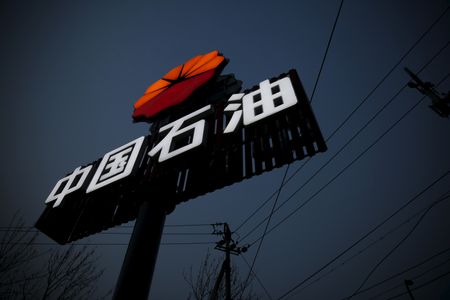
State oil major PetroChina on Wednesday cancelled a handful of gasoline and jet fuel shipments that were planned for October, three of the sources said, adding it had committed to most of these in the past two weeks.
Another major refiner, privately controlled Zhejiang Petrochemical Corp (ZPC), skipped scheduling any oil product shipments during the holiday week, the fourth source said.
PetroChina and ZPC did not immediately respond to requests for comment.
Although China has the world's largest refining capacity, its fuel export volumes have typically lagged behind India and South Korea among Asian processors.
INVENTORIES DECLINE
Uncertainty over crude availability and a drop in local fuel inventories prompted Beijing to focus on supply security, trade sources said.
Beijing has made exports contingent on local stocks returning to pre-war levels.
"Our analysis shows commercial gasoil and diesel inventories sitting around 20 million barrels below that threshold, with gasoline roughly 9 million barrels short, so a pause on those products was likely," said Zameer Yusof, a senior manager for clean oil products at Kpler.
For September, 1.4 million metric tons of diesel, 500,000 tons of gasoline and at least 2 million tons of jet fuel, including bonded volumes to Hong Kong and Macau, have been loaded, trade estimates showed, a decline from August.
Singapore, Malaysia, Australia, Vietnam, Bangladesh and the Philippines were among top destinations for Chinese fuel exports in September, data from Kpler and LSEG showed. South Korean refiners could cover part of the gap, although their spot volumes would be limited by term commitments, Yusof said.
Bangladesh, which sources up to a third of its refined fuel imports from China's Unipec and PetroChina, has not received any communication from them, a senior energy official said, adding that they could supply fuel from elsewhere if required.
(Reporting by Trixie Yap, Siyi Liu and Chen Aizhu; Additional reporting by Ruma Paul in Dhaka, Ashitha Shivaprasad in Bangalore, Lewis Jackson in Beijing; Editing by Clarence Fernandez, Florence Tan, Thomas Derpinghaus, Tom Hogue, Tony Munroe and Alexander Smith)
Find it fast
Looking for more insights? Explore our other news sections for updates on sustainable finance, companies and financial education