Top Russian banker says state asset grabs are spooking big business
By Elena Fabrichnaya
ST PETERSBURG, Sept 24 (Reuters) - Russian state asset seizures are deterring big businesses from investing in core operations due to fears of confiscation, senior state banker Andrei Kostin said on Thursday.
Since 2022, the authorities have seized assets worth around 7.6 trillion roubles ($89.5 billion) on grounds including corruption and national security, according to a September estimate by Moscow-based law firm Nektorov, Saveliev & Partners.
Addressing a forum of the Association of Banks of Russia, Kostin said property rights had become a key source of concern for businesses.
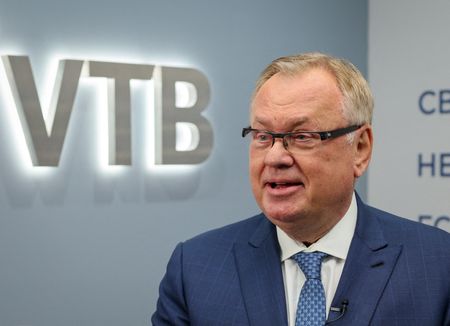
"Many people are investing, including major entrepreneurs, but not in their core business. They are trying to put money somewhere off to the side, saying: 'Well, they'll take this away from us anyway'," said Kostin, who is CEO of state-controlled VTB, Russia's second-largest bank.
"I think these fears are exaggerated, but they do in fact exist. So here, too, we need to proceed carefully, we need to look at the laws that have been passed, the decisions that have been made ... business must be protected," he said.
The government press office did not immediately respond to a Reuters request for comment.
In 2024, President Vladimir Putin acknowledged there had been a series of asset seizures but said they were justified only where owners’ actions harmed Russia’s security or national interests.
LIMIT ON LAWSUITS
Earlier this year, Russia adopted a law imposing a time limit on most lawsuits challenging privatisation deals, after the country’s largest business lobby appealed to Putin over a surge in state seizures of private property.
Russia's central bank has noted a rise in Russian investment in foreign companies. Its data shows more than $17 billion in capital outflows from January to July. On top of that, it recorded a further $10 billion in cross-border transactions it said it was unable to identify.
Subsidiaries of foreign companies operating in Russia have also been swept up in the state seizures. Earlier this month, the Kremlin transferred control of the Russian assets of Swiss food giant Nestle and French retailer Auchan into temporary administration, in one of the most significant actions against Western firms in recent years.
The Kremlin at the time said the decision was due to the companies being from "unfriendly" countries.
Kostin said overall the investment climate was worsening, but that Russia had seen an increase in Chinese investment and interest from Arab investors.
"The main factor going forward will be geopolitics. If geopolitics improves, the economic situation will improve, and investment growth will follow. If it does not improve, then we will continue overcoming difficulties," he said, adding that the situation was under control and that banking sector capitalisation was increasing.
Speaking at the same event, Central Bank Governor Elvira Nabiullina agreed with Kostin. "As for the assessment of the situation in the banking sector, and especially the need to improve the investment climate for sustainable economic growth, there can be no argument," she said.
($1 = 84.9497 roubles)
(Writing by Alessandra Prentice; Editing by Mark Trevelyan and Louise Heavens)
Find it fast
Looking for more insights? Explore our other news sections for updates on sustainable finance, companies and financial education