High European gas prices push power producers back to coal
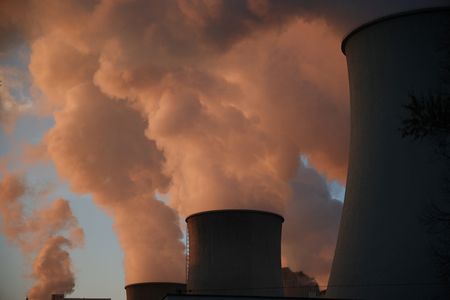
PARIS, Sept 24 (Reuters) - Soaring gas prices are driving European utilities back to coal, with power generation from the most polluting fuel likely to jump by a quarter in the next six months to offset a similar plunge in gas-fired generation, analysts said.
The Iran-US war has choked liquefied natural gas shipments through the Strait of Hormuz, sending benchmark European gas prices above €80 ($90.98) per megawatt hour this month, their highest in three years.
That has made coal and lignite plants more profitable to run on average than gas-fired equivalents for the first time since at least 2024, according to data from analytics firm ICIS, reversing the economics that had helped push coal steadily out of Europe's electricity mix.
But the power system has little additional flexibility if gas prices climb further, with Europe's ability to fall back further on coal increasingly limited after years of plant closures.
Coal's share of Europe's generation mix fell from more than a third of all electricity production in the EU in 1990 to its lowest point on record at 9.2% in 2025, Eurostat data showed.
Governments and utilities have closed large amounts of coal-fired capacity as renewable generation has expanded, but periods of high gas prices can still make the remaining plants economically attractive.
The so-called "clean dark spread", a measure of coal-generation profitability, has soared since the conflict began in late February, while the equivalent measure for gas, the "clean spark spread", has plunged.
While renewables can offset some fossil-fuel generation, their output depends on weather conditions.
Utilities still rely on coal and gas plants to balance the power system when renewable output is insufficient to meet demand or when solar supply drops over the winter.
COAL PLANTS NEARING THEIR LIMITS
The shift towards coal is particularly pronounced in Germany, Europe's biggest power market and gas consumer.
Coal-fired generation is expected to be close to its practical limit in the fourth quarter, matching the strongest quarterly output the remaining fleet has ever delivered, carbon market data provider Veyt data showed.
Almost all remaining spare coal capacity is constrained by plant availability rather than economics, its data showed.
That leaves relatively little room for power producers to respond to another gas-price spike by switching fuels.
"Even if the price of gas reaches €100/MWh, the power sector could not react that much more," ICIS analyst Florian Boehnke said.
COAL TO REMAIN DOMINANT TO 2028
The shift may also prove more persistent than an immediate response to the disruption in LNG supplies.
Coal is expected to remain cheaper than gas for power generation through next year and potentially until March 2028, according to Marta Wroniszewska, an analyst at Veyt.
Longer-dated gas prices indicate traders expect supply constraints to persist, she said.
Germany's closure of its last nuclear power plant in 2023 has further reduced the system's flexibility. The shutdown came after gas prices had fallen from the record highs reached during Europe's scramble to replace Russian gas supplies following the energy crisis.
($1 = 0.8794 euros)
(Reporting by Forrest Crellin, Editing by Susanna Twidale and Jan Harvey)
Find it fast
Looking for more insights? Explore our other news sections for updates on sustainable finance, companies and financial education