Germany cuts energy tax to offer motorists relief from soaring fuel prices
By Andreas Rinke
BERLIN, Sept 18 (Reuters) - Germany will cut taxes on gasoline and diesel by €0.17 ($0.1952) a litre, the government said on Friday, days after Chancellor Friedrich Merz promised relief for consumers and businesses hit by soaring fuel prices.
The move, which will cut taxes by a total of 2.5 billion euros, includes a €0.14 cut in the energy tax, equivalent to around €0.17 per litre once lower VAT receipts are taken into account, and will come into effect from October 1 and run to the end of the year, the government said in a statement.
In addition, the government said it would hold talks with the oil industry with the aim of introducing a cap on fuel prices, modelled on those in Luxembourg or Belgium, by January 1 2027 at the latest.
“Anyone who relies on their car every day is reaching their breaking point," Merz said in a statement. "We are showing that we are resilient in the face of the crisis and are helping our citizens," he said.
Funding for the cuts, which were agreed after extended negotiations between the federal government and state governments as well as between Merz's conservative CDU party and their Social Democrat coalition partners, will be divided between the federal government and the states, the statement said.
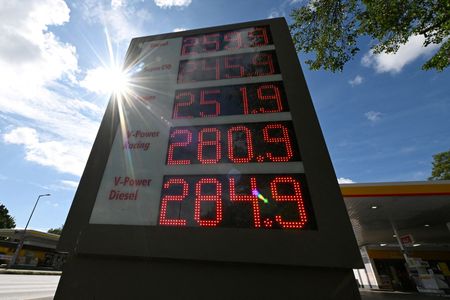
As the Iran war has helped push benchmark oil prices over $100 a barrel, gasoline prices have become a pressing political issue for Merz, whose approval ratings have plunged to record lows. Earlier this week, the nationwide daily average price for a litre of E10 gasoline hit a record €2.286 ($10 per gallon).
On Sunday, the capital Berlin and the northeastern state of Mecklenburg-Western Pomerania, a sparsely populated and heavily rural region where many people rely on their cars for transport, both go to the polls in elections expected to see Merz's conservative Christian Democrats heavily punished.
The results will be particularly closely watched after the far-right Alternative for Germany party came near to winning an absolute majority in a separate election in the eastern state of Saxony-Anhalt on September 6.
In Mecklenburg-Western Pomerania, the incumbent state premier Manuela Schwesig has accused Merz's government of standing by while fuel prices surge, and called for a fuel price cap based on the Luxembourg model of a nationwide maximum.
However the move was criticised by opposition parties and the environmental group Greenpeace, which said it did nothing to reduce dependency on the oil industry.
"A fuel rebate is not targeted, is harmful to the climate, and a large chunk of it ends up as excess profit in the pockets of the oil companies," the group said in a statement.
Earlier this year, the government offered some relief to motorists by reducing the energy tax from May through June, effectively lowering petrol and diesel prices by around 17 cents per litre and there were widespread calls for the cuts to be extended.
($1 = 0.8710 euros)
(Writing by James Mackenzie; editing by David Gaffen and Alistair Bell)
Find it fast
Looking for more insights? Explore our other news sections for updates on sustainable finance, companies and financial education