Culture clash: How Orcel's profit-boosting recipe could prove a bitter pill for Commerzbank

By Valentina Za and Elvira Pollina
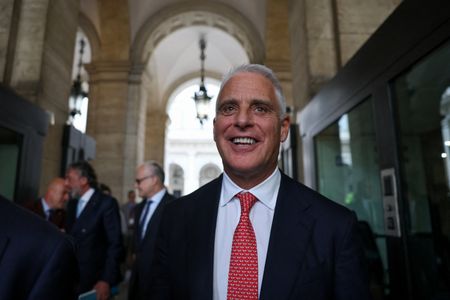
MILAN, Aug 14 (Reuters) - UniCredit's CEO Andrea Orcel has a blueprint for Commerzbank: slash costs, strip out management layers and push harder for revenue growth, a formula that has helped transform the Italian lender into one of Europe's most profitable banks.
Interviews with more than a dozen current and former UniCredit executives show how that transformation was achieved, and why replicating it at the German bank could prove far harder.
Orcel said last month that Commerzbank should adopt his blueprint from January, having secured 48% of the German bank's shares.
His plan entails shrinking the Frankfurt-based lender's cost base by €1.3 billion, a fifth of the total, while keeping it separate from UniCredit's German unit until 2029 to 2030.
The hostile bid has already alienated staff and management, German regulators have said, while European Central Bank supervisors have warned integration will be challenging and prolonged.
SHRINKING THE 'BLOATED CENTRE'
The experience of UniCredit offers clues to what lies ahead.
In reducing the workforce by a fifth since becoming CEO in 2021, Orcel, a former UBS investment banker, slashed the size of UniCredit's central corporate teams, which he has described as "the bloated centre", including by shifting hundreds of employees into branches to boost the sales effort.
A process the bank calls "de-layering" has seen UniCredit cut the number of management tiers between the top ranks and client-facing roles from nine to four.
Helped by higher interest rates and strict cost controls, UniCredit has showered shareholders with cash from record profits, driving a 10-fold increase in its shares since Orcel's arrival, roughly three times the European sector's rise.
Yet executives say the hard-nosed discipline has created strain internally.
UniCredit said in July it had cut the costs of "non-business functions", except the digital division, by five times more than overall costs. Several sources said revenue-generating roles were valued more highly than support functions.
Banking supervisors monitor whether control functions including compliance and risk retain adequate staffing as banks pursue cost reductions.
A UniCredit spokesperson said Orcel's strategy had been a "continued search for operational excellence reshaping the organization, its processes and its people way of working" so as to "eliminate duplication and unnecessary privileges and reset the sector's efficiency frontier".
The cuts have never been generic or in pursuit of short-term goals, but always aimed at securing the bank's long-term future, the spokesperson said, adding that the alternative would be "an uninvestable institution".
Orcel will need a different skillset than the financial wizardry that helped him gain control of the German bank, Chicago Booth professor Kilian Huber said.
"The challenges he now faces are ... about managing culture and transition processes over many years," Huber said, predicting a "bit of a culture shock" at Commerzbank.
The takeover looks all but certain. The ECB has found no grounds to block it under a preliminary assessment, but highlighted a "challenging and long-lasting" integration process, made harder by cultural differences and tensions created by the hostile bid, Reuters reported this week.
'DELAYERING' DELIVERED
At UniCredit, Orcel inherited a bank already emerging from a five-year restructuring under Jean-Pierre Mustier that lowered annual operating costs to 52% of income, similar to Commerzbank's current 50%.
Orcel pushed the ratio down a further 18 percentage points, including by taking another €470 million off the annualised cost base, even as revenues soared.
He has merged units within UniCredit's organisational chart into bigger divisions, cutting overall staff numbers within divisions and the senior people overseeing their work, one current and one former employee told Reuters.
UniCredit said in July the number of organisational units had fallen to about 6,400 structures from around 11,500 at the end of 2020.
One mid-level executive described the cost discipline as so strict it seemed better suited to a bank in distress than one handing out record payouts to shareholders.
Dozens of long-serving senior executives have left, with a high level of turnover at the top.
CONTRASTING CORPORATE CULTURE
UniCredit's 34% cost-to-income ratio places it alongside Italian rival Intesa Sanpaolo's 36% - both far below the 55% average for ECB-supervised banks.
But executives contrast the corporate culture and management style at UniCredit with Intesa.
The latter is known for giving staff job security while keeping a lid on pay. Orcel, instead, brought with him the mindset of large U.S. investment banks where top performers are richly rewarded and highly paid weaker performers are shown the door, one serving UniCredit executive said.
Orcel has pledged to lower Commerzbank's costs to 37% of income by 2030, targeting in particular central functions, non-core costs such as consulting and the bank's international network.
Chicago Booth's Huber said Commerzbank's business model, built around long-term client relationships, was more costly than UniCredit's, which has standardised its banking products to deliver them at scale.
"They must pay attention to that. That's a big challenge," he said.
(Editing by Tommy Reggiori Wilkes, Elaine Hardcastle and Alexander Smith)
Find it fast
Looking for more insights? Explore our other news sections for updates on sustainable finance, companies and financial education