European chemical firms post solid Q2 results but stay cautious on outlook
By Tristan Veyet, Vera Dvorakova, Ozan Ergenay and Bartosz Dabrowski
July 31 (Reuters) - European chemical companies reporting second-quarter results this week broadly beat market expectations through cost cuts, restructuring and resilient consumer-facing businesses, but most remained cautious on demand and the outlook for the rest of 2026.
The results point to a sector leaning on self-help measures such as cost cuts and restructuring to offset uneven demand.
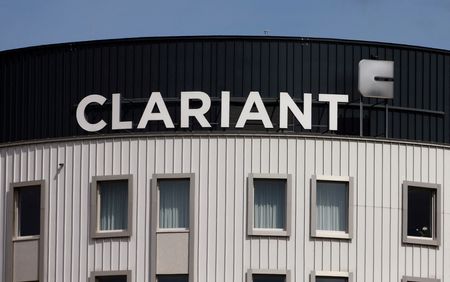
Solvay's cost-cutting measures helped offset the impact of the Middle East conflict, which added €20 million ($23 million) to its costs on core profit level. Clariant raised its cost-cutting target, while dsm-firmenich's restructuring plan could slash around 1,000 positions over the next 18-24 months while generating €100 million in recurring savings.
Growth in consumer-facing businesses such as flavours, fragrances and personal care contrasted with still-muted industrial activity, prompting caution on the outlook despite generally solid second-quarter performances.
Dsm-firmenich said on Thursday that activity accelerated sharply in June as customer sentiment improved amid easing concerns over the Middle East crisis. However, CEO Dimitri de Vreeze said he expected fragrance growth to moderate towards the industry's normal pace in the second half of 2026 and beyond.
Clariant CEO Conrad Keijzer struck a more upbeat note, saying the company expected a stronger second half in its catalysts business — which has been particularly hurt by the conflict — as customers outside the Middle East resume operations.
Wacker Chemie, meanwhile, raised its earnings outlook after stronger-than-expected quarterly results, but cut its sales forecast. CEO Christian Hartel said the company saw "no sign of a turnaround" in demand, citing weak automotive and construction markets, excess industry capacity and continuing uncertainty over trade policies and geopolitics.
GEOPOLITICAL UNCERTAINTY
Analysts flagged unresolved geopolitical risk as a key swing factor for the industry.
"I think the outlook for the European chemicals industry is heavily dependent upon the length of the Iran conflict," Berenberg analyst Sebastian Bray said, adding that balancing conflict-driven chemical prices against higher oil prices was among the reasons why companies were cautious about raising profit forecasts.
"It makes sense that companies do not want to stick their neck out in such an environment that you cannot control," Van Lanschot Kempen analyst Eric Wilmer said.
Bray also noted that the Chinese industrial policy driving overcapacity had not changed meaningfully, building up longer-term pressure, while a possible end to the war could bring down prices.
"This suggests 2027 could be characterized by deflationary chemicals pricing and a return of overcapacity headwinds, even if domestic German stimulus helps demand," he said.
($1 = 0.8688 euros)
(Reporting by Tristan Veyet, Bartosz Dabrowski, Vera Dvorakova and Ozan Ergenay, editing by Milla Nissi-Prussak)
Find it fast
Looking for more insights? Explore our other news sections for updates on sustainable finance, companies and financial education