Czech president vetoes bill easing rules for government borrowing
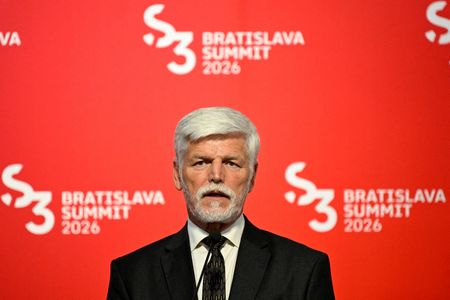
PRAGUE, July 22 (Reuters) - Czech President Petr Pavel vetoed a bill easing bill easing national fiscal rules, which critics say opens a path to raise debt in the coming years.
Lawmakers in the lower house approved the bill in May before it was returned by the upper house, the Senate, and overrode that veto earlier this month.
The presidential veto forces another vote in the lower house, where the government led by the eurosceptic populist party of Prime Minister Andrej Babis holds a comfortable majority.
Pavel said in a video statement the law threatened long-term fiscal sustainability and widened the government's room to raise spending without parliamentary approval.
The bill exempts a long list of road, rail, nuclear power plant and dam projects from calculations for budget deficits. It also extends an exemption given to defence spending if it exceeds 2% of gross domestic product.
The new bill also allows the government to raise spending by up to 10% under loosely defined security threats, which the opposition says is an unacceptable relaxation.
The country's independent budget watchdog has called the changes a fundamental weakening of fiscal discipline.
The government says it is necessary as current rules mandate impossible budget cuts. Finance Minister Alena Schillerova has said the cabinet would keep the deficit under 3% of GDP - the ceiling mandated by the European Union.
The previous government made fiscal consolidation a pillar of its rule and brought the deficit back below the EU's 3% of GDP ceiling to 2.1% in 2025.
Under current plans, the deficit should rise to 2.6% of GDP this year and 2.8% in 2027 before declining again.
Debt would peak at 46.8% of GDP next year, still well below EU averages.
(Reporting by Jan Lopatka, Editing by Nick Zieminski)
Find it fast
Looking for more insights? Explore our other news sections for updates on sustainable finance, companies and financial education