Under-fire German ruling coalition unveils reform package
By Andreas Rinke and Miranda Murray
BERLIN, July 2 (Reuters) - German Chancellor Friedrich Merz's ruling coalition unveiled a package of reforms on Thursday, including €10 billion ($11 billion) in annual tax relief for lower-income earners, changes to the pension system and building more affordable housing.
Trailing in opinion polls behind the far-right Alternative for Germany party, Merz has faced heavy pressure to pass reforms to revive Europe's largest economy but has struggled to overcome internal coalition wrangling and gain momentum.
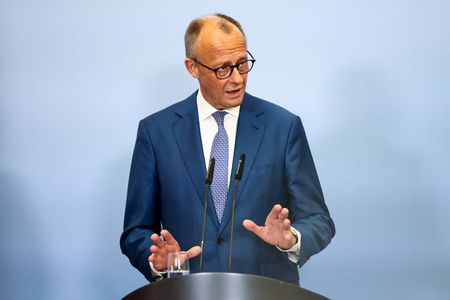
"We want to get Germany back on track," Merz told reporters on Thursday.
The long list of measures aimed to tackle a variety of issues and cut red tape. They include an action plan against benefit fraud and abolishing workers' ability to obtain sick notes by phone, as well as a goal to cut staffing by 8% in federal ministries through digitisation.
The tax relief will be mainly funded by raising the top rate of tax to 47% from 45% for the highest earners with an annual income of €280,000 or more.
"The government has demonstrated its ability to agree on key structural reforms and implement them by the end of the year," said Marion Muehlberger from Deutsche Bank Research, calling it one of the most significant reform packages in decades.
"This is likely to boost sentiment and reinforces our forecast of accelerating economic growth in the second half of the year."
Merz's government has stressed the urgency of the reforms, wanting to speed up growth and help companies become more resilient amid ferocious foreign competition.
The German economy has been struggling since the pandemic to regain momentum, with increased competition from China as well as higher energy prices -- caused first by the Ukraine war and now exacerbated by the Iran conflict -- challenging its export-driven economic model.
The government in April halved its growth forecast for 2026 to 0.5% and has also cut its growth prediction for 2027 to 0.9%, down from a previous estimate of 1.3%. It also raised its inflation projections, as soaring energy prices take their toll.
($1 = 0.8777 euros)
(Reporting by Andreas Rinke, Miranda Murray, Friederike Heine, Rene Wagner and Matthias Williams; writing by Matthias Williams; editing by Thomas Seythal and Gareth Jones)
Find it fast
Looking for more insights? Explore our other news sections for updates on sustainable finance, companies and financial education