Europe's economic resilience gives ECB greater room to move rates, Lagarde says
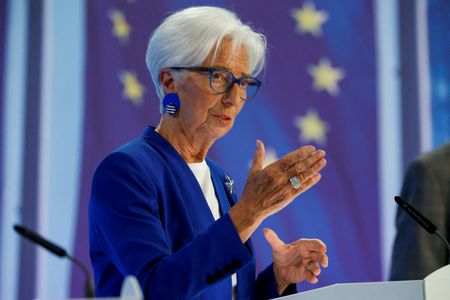
SINTRA, Portugal, June 29 (Reuters) - The euro zone economy appears to have built greater resilience to economic shocks, allowing the European Central Bank to raise interest rates more easily without fearing it would set off financial stress, ECB President Christine Lagarde said.
This resilience may come in handy as the 21-nation currency bloc is likely to face a growing number of inflation shocks in the coming years, with policymakers likely to face a dilemma of simply looking past the price volatility or acting forcefully, Lagarde said in a speech on Monday.
The ECB became the world's first major central bank this month to raise interest rates on the Iran-war induced energy shock and policymakers are now debating whether a follow up move is needed to contain price pressures.
This economic resilience is a function of the ECB's beefed up toolbox, the improved financial architecture of the broader euro zone and a host of other instruments, like joint bank supervision.
"While we are more likely to face shocks that push inflation away from target, the resilience Europe has built means their effects on our economy are more contained," Lagarde said at the ECB forum on Central Banking.
"We may therefore more often find ourselves in an intermediate zone, between shocks we can look through and those we must react to forcefully."
Getting the response right in this grey zone required innovation from the ECB and the bank will rely on the innovation of the past several years for its coming decisions, Lagarde said.
The bank now uses advances in data to get a real-time picture for economic and price developments and it has invested heavily in improving its projections, which have proved reliable over the volatility of the several months.
"And the two reinforce each other: we can continually cross-check our forecasts against incoming data to verify whether they remain on track, so that we do not end up relying on forecasts that are out of date," Lagarde said.
Such a framework for policy even buys the ECB time to act since financial markets start to price in action well before actual policy is changed. Thus the ECB is not under time pressure to step in.
Markets already anticipated a rate hike well before the ECB pulled the trigger in June, giving policymakers time to actually sift through the data and make a more confident call, Lagarde said.
(Reporting by Balazs Koranyi; Editing by Chizu Nomiyama )
Find it fast
Looking for more insights? Explore our other news sections for updates on sustainable finance, companies and financial education