Analysis-Mbappe's Mao remarks expose costs of crossing China's red lines
By Casey Hall
SHANGHAI, Oct 28 (Reuters) - Real Madrid forward Kylian Mbappe's rapid fall from favour in China after remarks about Mao Zedong followed a familiar pattern: online outrage, corporate distancing, platform restrictions and official intervention.
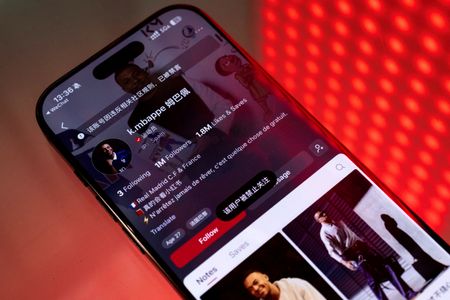
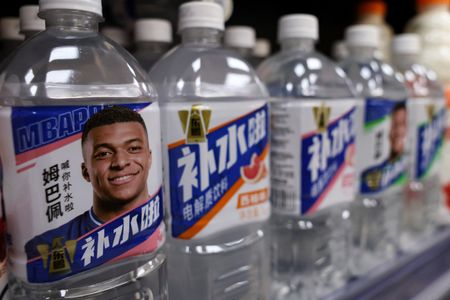
Within 24 hours of a podcast clip surfacing in which the France captain referred to Mao as "some guy - I think he's a Chinese dictator", sponsors including Mengniu Dairy, Shanghai Milkground and energy drink-maker Eastroc ended cooperation with the footballer.
State broadcaster CCTV removed Mbappe-related advertising and Chinese social media platforms restricted access to his accounts. Mbappe apologised on Tuesday, describing his remarks as "ill-judged".
The speed of the fallout will be familiar to companies, brands and celebrities with exposure to China. Analysts say the episode is the latest reminder of a business risk that remains difficult to manage despite years of similar controversies.
Foreign brands have repeatedly faced public backlash in China, from Dolce & Gabbana's cancelled Shanghai fashion show in 2018 and apologies by Versace, LVMH-owned Dior and Tapestry's Coach in 2019, to boycotts of H&M, Nike and Adidas over Xinjiang cotton and the NBA's fallout with CCTV after a Houston Rockets executive expressed support for Hong Kong's pro-democracy movement.
The details differ, but the pattern is similar: a remark, image or statement gains traction online, commercial partners come under pressure to respond, and reputational damage quickly outgrows the original offence.
"You don't need to think like a Chinese person to succeed in China, but you do need to understand how Chinese audiences will react and the cultural implications of not self-policing," said Michael MacRitchie, founder of MGI Group, which connects global celebrities with Chinese brands.
A MATTER OF RESPECT
A central question in such episodes is how much of the backlash reflects genuine public anger and how much is amplified by state media, online platforms and official actors.
The Mbappe case illustrates how difficult that distinction can be to draw. As the controversy unfolded, the original comments about Mao were largely inaccessible on China's heavily censored internet. Many consumers were therefore exposed less to what Mbappe said than to reports that sponsors had dropped him and official media were condemning him.
"What we've had in this situation is to a certain extent a manufactured outrage," said Mark Dreyer, a sports analyst and author of "Sporting Superpower", a book about China's sporting ambitions.
Even so, Dreyer said it would be unwise for leagues, clubs and athletes to underestimate the reaction such incidents can provoke.
"They can't be seen to be giving a stated directive to their players not to say anything that could offend China," he said. "Of course, behind the scenes, I'm sure people are being told, just be careful, be sensible, be aware that these sorts of reactions can happen."
Zak Dychtwald, founder of BridgeWorks Global, which advises multinational organisations, said that although these controversies remain relatively common, they are preventable.
"If you are participating in this market, the expectation is that you respect China's self-narrative and you have a basic understanding of what it is. Red line education should come at the foundation of it," he said.
Another challenge for brands, leagues and celebrities, however, is that while China's political and cultural red lines are broadly understood, they are rarely clearly defined. That uncertainty can encourage companies and commercial partners to distance themselves from controversial figures before the scale of any offence has been fully established.
"There is no rule in black and white for what crosses a line," said Wei Kan, founder of consultancy Conduit Asia. The line shifts depending on "how consumers feel, the wider mood in society, and how platforms and media amplify a story," he said.
For foreign businesses, China's sensitivities should no longer come as a surprise. Yet analysts say political and cultural risks are still often treated as secondary considerations rather than routine commercial hazards.
MacRitchie said his firm includes behavioural and reputational clauses in endorsement contracts; others point to market-specific briefings, media training and crisis-response planning as increasingly necessary safeguards rather than optional precautions.
"When it goes well, everybody celebrates," Dychtwald said. "But when you get (China) wrong, it can be extraordinarily painful and swift in its retribution."
(Reporting by Casey Hall in Shanghai, additional reporting by Josh Arslan in Beijing, editing by Ed Osmond)
Find it fast
Looking for more insights? Explore our other news sections for updates on sustainable finance, companies and financial education