Hungary plans renewable energy push to curb prices and import needs
By Gergely Szakacs
BUDAPEST, Oct 8 (Reuters) - Hungarian Prime Minister Peter Magyar's government plans a major drive into renewable energy to curb high import needs and lower electricity prices for companies, a top energy official said on Thursday.
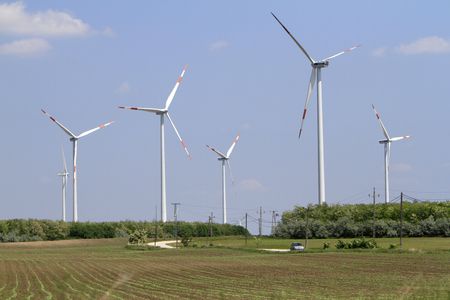
As a first step, Magyar's cabinet launched a tender in August to build 700 MW of wind turbines, aiming to boost wind power capacity to 4 GW by 2030, a more than 10-fold increase and a major shift from former leader Viktor Orban's policies.
"One of the main aims of the entire strategy is to make corporate energy supplies, which are currently exceptionally expensive even by European standards, cheaper. This will not happen from one year to the next," Energy Affairs State Secretary Andras Totth said.
In addition to the nearly 9 GW of solar power built up in past years, which was the favoured renewable energy source under Orban, Totth said the country could boost wind power capacity to more than 6 GW by 2040 to curb power prices and import needs.
Hungary imports more than 80% of its fuel needs, including nuclear, oil and natural gas, a dependence that S&P Global described as a key vulnerability when it affirmed the country's credit rating at BBB-minus with a negative outlook in May.
"We are entirely exposed to geopolitical shocks. Therefore, the Hungarian energy system is a competitive disadvantage for the Hungarian economy," Totth told a conference organised by financial news website portfolio.hu.
Magyar ousted Orban from power after 16 years in April on a pro-European Union turn, securing the release of billions of euros worth of suspended EU funding, part of which will go into investments to shore up Hungary's energy infrastructure.
"In the past more than 10 years, we have heard much about energy sovereignty, which essentially does not exist," Totth said.
He said a severe drought, which pushed Hungary's only nuclear power plant in Paks to the brink of shutdown in August following a plunge in water levels on the Danube River, has exposed the vulnerabilities of the country's energy system.
"There were days when only imports kept Hungary alive every minute of the day," Totth said. Even so, the lifetime extension of the 2 GW Russian-made plant would be a "critical project."
"At present, it is the cheapest conventional project we can carry out, and it will be a priority in the future," he said.
(Reporting by Gergely Szakacs; Editing by Emelia Sithole-Matarise)
Find it fast
Looking for more insights? Explore our other news sections for updates on sustainable finance, companies and financial education