ECB's Rehn says soaring yields may curb inflation impact of expensive energy
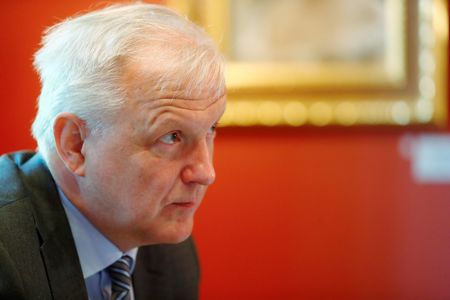
FRANKFURT, Oct 2 (Reuters) - Energy prices are approaching the European Central Bank's "adverse" scenario, but soaring long-term borrowing costs limit just how much of this inflation can be transmitted through to the broader economy, Finnish central bank chief Olli Rehn said on Friday.
Inflation has risen well past 3% in recent months and could approach 4% by the end of the year, twice the ECB's target, putting pressure on the central bank to raise interest rates further after two hikes this summer.
While the ECB has said that risks are skewed toward higher-than-forecast inflation readings, Rehn pointed to risks in both directions.
"Higher energy prices bring us closer to the ECB's adverse scenario in terms of inflation," he told a conference of the European Systemic Risk Board.
"On the other hand, the rise in long-term interest rates will slow growth and reduce the pass-through of the energy shock to other prices and wages," Rehn said. "This underlines the fact that the projections for growth and inflation continue to be subject to very high, pervasive uncertainty."
Government borrowing costs have soared in recent weeks, reflecting in large part a rise in US yields on worries that Washington's fiscal policy is on an unsustainable course.
Yields have also increased as the world's largest tech companies issue record debt to finance AI investment, crowding other borrowers, including sovereigns, out of the market.
At 3.57%, the 10-year borrowing cost of Germany, one of the safest borrowers, is at a 17-year high, while a similar US bond yields 5.32%.
Rehn also warned that tech borrowing posed a stability risk because valuations were so high, making a correction possible.
"A sharp correction in AI-related valuations could spread through equity and credit markets," Rehn said. "History teaches us that technological revolutions can transform economies, but also that financial markets may overestimate their immediate returns."
Still, the euro zone economy is proving surprisingly resilient and growth is holding up better against high energy costs than feared, Rehn said.
(Reporting by Balazs Koranyi; Editing by Paul Simao)
Find it fast
Looking for more insights? Explore our other news sections for updates on sustainable finance, companies and financial education