Yen slips as intervention threat persists, dollar steady
By Ankur Banerjee and Harry Robertson
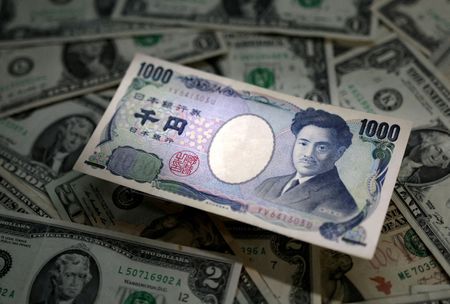
SINGAPORE/LONDON, Sept 21 (Reuters) - The Japanese yen weakened on Monday after volatility late last week put traders on alert for possible currency intervention, while a series of rate hikes and hawkish signals from central banks helped to strengthen the dollar.
Traders stayed vigilant for signs of Tokyo stepping into the market as Japanese markets were closed for a three-day holiday, leading to low liquidity.
The dollar, meanwhile, rose 0.2% against the yen to 157.17 yen.
The Bank of Japan raised rates on Friday to their highest level in 31 years, 1.25%, but two dissenting votes and a lack of explicitly hawkish guidance left investors reluctant to buy the currency.
Following the decision, the yen fell sharply before a slight rebound as the Nikkei newspaper reported that Japanese officials had conducted rate checks, often seen as a precursor to currency intervention.
"The rate check should help to dampen market expectations for how much the yen will be allowed to weaken in the near-term," said Lee Hardman, senior currency analyst at MUFG.
Apart from the BOJ, the Federal Reserve and the European Central Bank raised rates this month. Both warned further tightening might be needed to tackle inflation linked to the almost seven-month-long war in the Middle East.
The dollar index, which tracks the US currency against six major peers, was steady at 100.28 after gaining more than 1% last week following the Fed's rate hike.
Traders are pricing in a 55% chance of a rate hike at the Fed's next meeting in October, up from 43% a week earlier, the CME FedWatch tool showed.
The euro was little changed at $1.148 after voting projections showed the far-right Alternative for Germany took first place in state elections in northeastern Germany, in a blow to Chancellor Friedrich Merz's conservative party.
Sterling fell 0.1% to $1.339.
BULLISH YEN BETS TESTED
The yen had firmed to its strongest level in seven months in early September as traders wagered on a faster pace of BOJ hikes and early signs of repatriation by Japanese investors but the currency has since surrendered some of those gains.
Positioning data showed investors had grown more bullish on the yen heading into the BOJ meeting. Speculators increased net long-yen positions in the week to September 15, weekly US regulatory data showed, with their net-long exposure swelling to $9.7 billion, the largest since July 2025.
Fred Neumann, chief Asia economist at HSBC, said the BOJ's messaging has become harder because the Fed delivered a hawkish signal with its unanimous decision to raise its policy rate.
"The bar thus remains high for the BOJ to convince markets of its hawkish tilt and anchor expectations when it comes to the yen," he said.
Thomas Mathews, head of markets for Asia-Pacific at Capital Economics, said despite the BOJ's hike it's clear the market sees the Fed as the more hawkish of the two.
"That said, given the yen is still quite a bit stronger than it was, it might take a bit more of a slide before intervention is back on the table," Mathews said.
The yen slid to a four-decade low of 163.99 per dollar in July before a rare coordinated intervention by Tokyo and Washington helped lift the currency.
(Reporting by Ankur Banerjee in Singapore and Harry Robertson in London; Editing by Sonali Paul and Barbara Lewis)
Find it fast
Looking for more insights? Explore our other news sections for updates on sustainable finance, companies and financial education