Switzerland launches consultation on stricter bonus rules for bankers
By Dave Graham
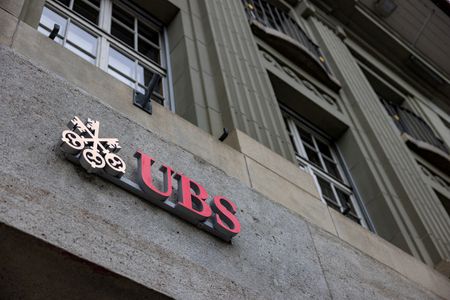
ZURICH, Aug 12 (Reuters) - Switzerland launched a public consultation on Wednesday on tougher banking regulations that would include stricter rules on bonuses at UBS in a bid to boost financial stability following the 2023 collapse of Credit Suisse.
Under the proposals, banks must structure bonus schemes to reward long-term, sustainable performance and discourage excessive risk-taking, the government said, with stricter rules for systemically important lenders such as UBS, Switzerland's only remaining global bank after its takeover of Credit Suisse.
The plans were not aimed at capping pay, but at ensuring banks were geared towards responsible, long-term success, Finance Minister Karin Keller-Sutter told a press conference.
"Time and again it's obviously a source of annoyance to the public, and quite rightly, that remuneration is paid out even when business performance is poor...and sometimes even when someone hasn't lived up to their responsibilities," she said. "This is an area where it ought to be possible to intervene."
The government sketched out the new rules last year, as part of an overhaul of its "too-big-to-fail" regulations launched in response to the scandal-ridden demise of Credit Suisse, which dealt a heavy blow to Swiss banking prestige.
Lawmakers are already debating government proposals within that package of measures aimed at rendering the banking system more robust by making UBS hold more capital.
Keller-Sutter has stuck to a tough line on the capital rules even as some lawmakers within her own party, the centre-right FDP, have pitched easing the proposed burden for UBS.
UBS said it would analyse the proposals and expressed support for a stronger regulatory framework in Switzerland, even as it said the country already had one of the most stringent globally.
"Adjustments should be targeted, internationally aligned and proportionate, considering differences in size and complexity of banks operating in Switzerland," UBS said.
BONUS PAYMENTS SUBJECT TO FUTURE PERFORMANCE
Under the bonus proposals, a significant portion of variable compensation must be deferred for top executives and high earners for several years, the government said, noting that internationally, this typically meant four to five years.
If misconduct or losses emerge during the deferral period, banks will be required to reduce or cancel outstanding bonuses. Paid-out bonuses could also be clawed back in cases of proven wrongdoing under the Swiss plan.
In the package put up for consultation on Wednesday, banks with at least 250 employees would have to clearly assign responsibility for key decisions to senior managers.
Market regulator FINMA would also gain powers to intervene earlier when risks emerge, impose fines on institutions and levy penalties for delays in implementing supervisory orders.
The Swiss Bankers Association said the proposals went too far, and the lobby raised concerns about what it described as the "vastly expanded powers" FINMA could be granted.
"The crisis at a single bank does not justify across-the-board tightening of regulations for other banks," the SBA said.
The plans also bolster requirements for systemically important banks' stabilisation and resolution planning.
They also envisage simplifying the transfer of collateral to the Swiss National Bank, with the purpose of supporting banks' ability to obtain central bank liquidity in a crisis.
The consultation runs until November 19, 2026.
(Reporting by Dave Graham; Additional reporting by John RevillEditing by Elaine Hardcastle)
Find it fast
Looking for more insights? Explore our other news sections for updates on sustainable finance, companies and financial education