Renk CEO says 99% of land business will remain crewed through 2030
(Corrects day of the week in paragraph 1.)
By Maria Rugamer
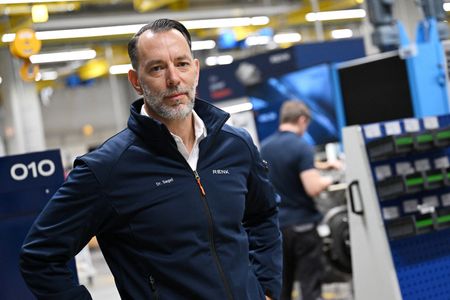
Aug 6 (Reuters) - Renk Chief Executive Alexander Sagel said on Thursday he was "very sure" that 99% of the German defence supplier's land business would still involve crewed vehicles by 2030, pushing back against suggestions that drones and loitering munitions are making heavy armour obsolete.
Speaking on the company's second-quarter earnings call, Sagel said meaningful demand for unmanned military platforms was unlikely to emerge before 2035.
He said NATO's July summit in Ankara had reaffirmed the need for a mix of capabilities including air defence, long-range strike systems, drones and what he called "conventional mass" across land and naval platforms.
The comments come amid a growing debate over whether drones and autonomous systems could reduce demand for traditional armoured vehicles, one of Renk's core markets.
Sagel pointed to the recent conflict involving Iran as evidence that air power and precision strikes alone cannot decide a war, saying "you cannot end a war, and you cannot win a war ... just by drones, just by airstrikes, and just by long-range smart missile attacks."
Sagel argued that unmanned systems would complement rather than replace existing platforms and said Renk was already developing products for that market. He cited a heavy tracked unmanned ground vehicle developed with Finland's Patria and a Finnish order for a pre-series batch, with deliveries due to begin in the second quarter of 2027.
He added that Ukraine had expressed strong interest in that vehicle's transmission system.
European governments are increasingly weighing how to balance spending between traditional armoured programmes and newer drone and autonomous technologies as defence budgets rise across the continent.
(Reporting by Maria Rugamer; Editing by Matt Scuffham)
Find it fast
Looking for more insights? Explore our other news sections for updates on sustainable finance, companies and financial education